Tuesday, April 17, 2012
Written Assignment 14
The development of the counterculture was caused by several different factors. Identify at least two of these factors, and explain their significance.

The American War in Vietnam

I) Vietminh as US allies
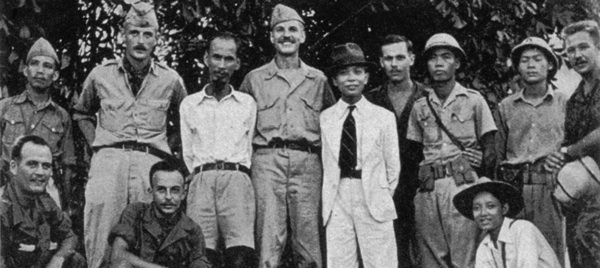

2) Vietminh armed forces – with military supplies from the US, the Vietminh fought an effective guerilla war against the Japanese.
B) Japanese surrender – when the Japanese surrendered, the Vietminh expected the US to continue to support them in their effort to establish an independent country
II) French attempt to re-colonize – the Vichy government (the government which controlled France during the Nazi occupation of that country) had surrendered to the invading Japanese, but many French rubber plantation owners had in fact cooperated with the Japanese, and were allowed to maintain their property.

B) US aid to France – the US provided some military assistance to their NATO alliance partners, in the form of credits and some military advisers
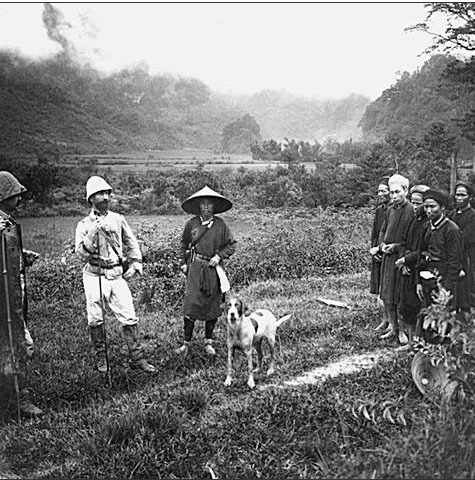
C) French military offensive
1) 1946 – while the Vietminh were still expecting the US to side with them in the dispute, the French forces in Vietnam were able to drive the Vietminh forces out of most of the cities in the country
D) French military defeats – after their initial victories against the Vietminh, the French suffered a series of devastating defeats; in response, the French government changed military commanders in the country.

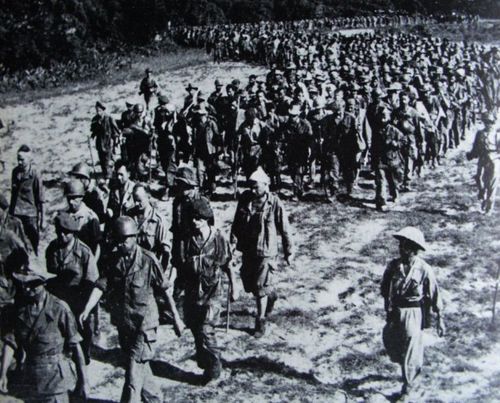
3) Geneva Accords – at the insistence of the United States, the country of Vietnam was divided “temporarily” along the 17th Parallel, and nationwide elections to choose a government for a unified Vietnam were to be held in 1956

A) Government of South Vietnam – largely a paper tiger, if not a myth. The government in South Vietnam never enjoyed any widespread popular support; if it were not for the millions and eventually billions of dollars that the US poured in to the country, it would have collapsed of its own inertia long before 1975, when the North Vietnamese Army finally rolled into Saigon. As a secret government study conducted by the Pentagon, and leaked as the famous “Pentagon Papers,” the “government” of South Vietnam was largely a creation of the United States government.

(a) Diem’s only support in the country come from other Vietnamese Catholics (a very small percentage of the population, by the way), and other Vietnamese who had collaborated with the French
2) US $$$ -- the United States was positive that given a choice, no country would want to pass up the political and economic advantages that could be provided by alliances with the US

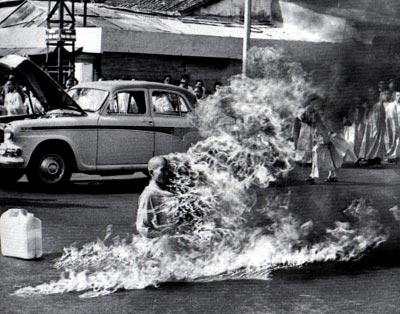
1) Counterinsurgency – the creation of a Special Forces branch in the Army, which supposedly would be able to respond to Communist aggression around the globe
(a) “Green Berets” – to train South Vietnamese forces in techniques of counterinsurgency, and dry up the sea of support which the National Liberation forces swam in (an allusion to an idea Mao espoused, where he compared guerilla forces to fish in a sea, undetectable among other fish.
(b) Cowboys and Indians – the Vietnamese forces were an unconventional enemy that enjoyed widespread support among the people of the rural countryside—which in Vietnam, meant most of the people living in the country.
(c) Lack of success – the lack of success that the South Vietnamese forces enjoyed in their counterinsurgency battles meant that more and more money and material was flowing into the country from the US, as were more and more military advisors, to “support” the Army of the Republic of Viet Nam (ARVN).
IV) Escalation of US Involvement

1) Gulf of Tonkin Resolution – after the alleged attack, President Johnson asked Congress for, and received, authorization from Congress to “take all necessary measures to repel armed attacks against the forces of the United States and to prevent further aggression.”
(a) Gulf of Tonkin Resolution was passed unanimously in the House, and only two dissenters in the Senate (both of whom lost in the next election that they faced.
B) Da Nang

C) The Undeclared War – as more troops were committed, soldiers and Marines from the United States began to assume more of the responsibility of the fighting in this undeclared war

2) The Air War – the US dropped four times the amount of bombs in Southeast Asia than were used by all belligerents during World War II; but this bombing campaign was relatively ineffective against an enemy that was fighting a low tech war anyway—there simply was not much infrastructure to destroy.

4) Selective Service – because of college student deferments, the burden of service in this war fell inordinately upon the working-class; in fact, Harvard, Yale, and Princeton (the three premier universities in the country) between them only had one alumnus die. George W. attended Yale, drank his way through four years, and then conveniently “served” in the Air National Guard; Albert Gore, Jr. graduated from Princeton, and served in Vietnam—as a correspondent for Stars and Stripes, the newspaper written for members of the military.

1) “The light at the end of the tunnel” – in January 1968, Gen. Westmoreland declared that the end of the war, now three years along in the involvement of US forces, was at hand, that officers there were confident that they were able to see the light at the end of the tunnel.
2) The Tet Offensive – just after Westmoreland made his observance about the end of the war, the National Liberation Front launched its Tet Offensive. This offensive caught the US and South Vietnamese forces completely by surprise, and NLF forces captured several cities in the south (including the center of religious life in Vietnam, Hue), and threatened to capture Saigon. The NVA had coordinated an attack at a Marine camp called Khe Shanh at this time, and held it under siege for several weeks.
3) Result – the effect of the Tet Offensive, from a military view, was a crushing defeat for the NLF and NVA; the US forces eventually defeated the combined force, and retook all of the lost territory; the NLF in particular was decimated.
(a) The end of US involvement – it became obvious to even the most casual observers that the end of the war was no where close to happening; popular support for continued US involvement in the war began to shift dramatically from this point.
(b) This was less a result of the growing protest movement, but increased frustration on the part of the general public at the apparent stalemate in the war
Sunday, April 15, 2012
Rock and Roll and the Counterculture
I) Working-class in the South
A) African Americans
1) Sharecroppers in the Mississippi Delta – the Delta area covered much of northwestern Mississippi, between the Mississippi and Yazoo Rivers, and was the area in the state most devoted to the cultivation of cotton, and therefore had a high concentration of descendents of former slaves in the area.
2) Musical traditions – work songs, which helped regulate the pace of labor (as well as help the time pass more quickly); sacred music; both forms used “call and response.”
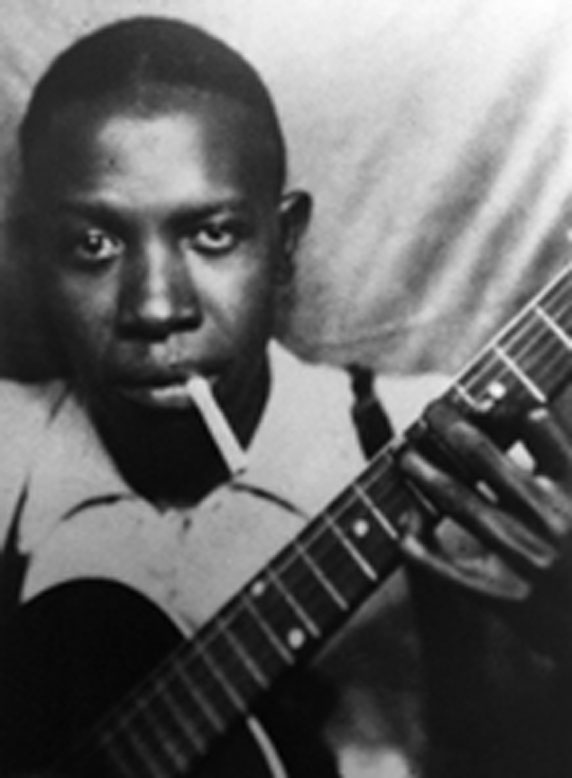
3) Itinerant musicians – the Delta area, before the advent of the juke box and radio, had a tradition of musicians who traveled from plantation to plantation to play music for Saturday night fish fries, and at “juke joints.” For many men (and a few women), this was the only chance for them to avoid a life of back-breaking, ill-paying labor
(a) Charley Patton
(b) Robert Johnson – became a big star twenty years after his death, when recording of twelve of his songs became the visible sign of “hipness”
(c) Huddie “Leadbelly” Ledbetter
(d) B.B. King
(e) Muddy Waters
(f) Howlin’ Wolf
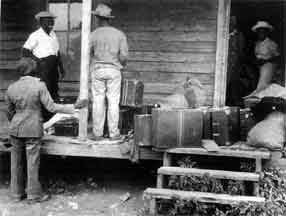
4) Movement off farms into cities – so-called “chain” migration—migrants often first moved into cities in the South, and then into cities in the North from there
(a) Pull of wartime employment – as jobs opened up to African Americans in factories and docks in the North, many left farms to fill these jobs in the North.
(b) Push of mechanization – after the war, cotton cultivation became increasingly mechanized, which meant that it was cheaper for large landowners (plantation owners) to buy tractors, cultivators, etc., and dismiss their sharecroppers—which in turn meant that these sharecroppers were forced to move off the land that they had cultivated; many chose to move into cities.

B) Poor white southerners – segregation, that we think of as personifying life in the South (and in the North, for that matter), is really an urban phenomenon than something that takes place in a rural environment; poor southern whites often found themselves in similar situations as their African American neighbors.
1) Tenant farmers – depressed farm prices had earlier forced many tenant farmers off farms and into cities, north and south.
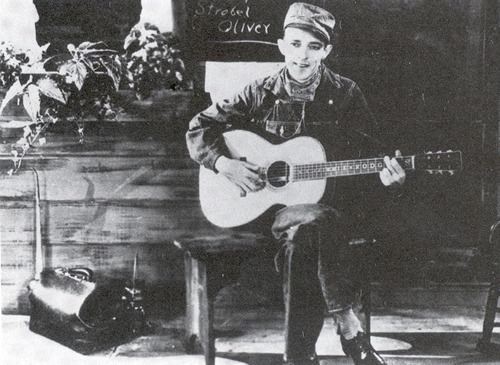
2) Musical traditions
(a) Secular – “hillbilly” music; without radio, many people had to entertain themselves, and their neighbors. White musicians in the south had a long tradition of learning music from their African American neighbors
(b) Sacred – prevalence of Pentecostal religions in the South (both white and black) meant that adherents to these various sects were familiar with emotionally charged music, from their church services.
3) Movement off farms and into cities – for many of the same reasons that African Americans moved into cities; same kind of chain migration as was the case with African Americans.
(a) Wartime employment
(b) Mechanization of farming in the south
II) Radio – radio became the vehicle for popularizing “race” music among a wider audience
A) Clear Channel Stations – (not those of the company of today) in the late 1940s and 1950s, there were a number of 50,000-watt (the largest the government would allow) stations that could be heard (best at night) over much of the country—the so-called “clear channel” stations.

1) WDIA—white-owned radio station in Memphis that began playing “race” music, and featured African American radio personalities, including Riley “Blues Boy” King (better known to us today as B.B. King) and Rufus Thomas, both of who became well-known performers of blues and rhythm and blues (R & B) music.
2) WHBQ – white-owned radio station in Memphis began playing “race” music at night for the African American audience in the city, and as a result a number of white audience members were exposed to the music, as well. DJ Dewey Phillips’ nightly show, “Red, Hot and Blue” became a particular favorite.
3) WLAC – Nashville record station, where a local business, Randy’s Record Mart (which did a big mail-order business), sponsored a blues radio show at night. The owner also owned Dot Records, which began releasing recordings of popular r&b songs redone by white artists—in particular, Pat Boone (whose first big hit was “Ain’t That a Shame”)
B) Sam Phillips and Sun Records
1) Sam Phillips – white engineer opened Memphis Recording Service, and began to seek out local African American talent to record. Phillips quickly became frustrated at the limited sales that the race music was able to attain, and he begins to seek out a white singer to perform music in this style.
(a) How does Phillips know that such a person exists? – because he himself enjoys such music, and is confident that other white southerners feel the same way, and are performing such music out there somewhere.
III) Elvis

A) Childhood – Elvis was an only child (his twin brother, in fact, died soon after he was born) brought up by a doting, domineering mother and a largely absent father.
1) Pentecostal church upbringing – Elvis attended sanctified churches with his parents, where he would have been exposed to the emotionally charged services that these churches are known for.
2) Working-class upbringing – Elvis’ childhood was rather economically distressed, his father worked a series of rather low paying jobs. Elvis grew up in Tupelo, MS, and although the public schools that he attended were segregated, and the public facilities (theaters, restrooms, etc.) were segregated by race, the town itself was only segregated by income.
3) Father imprisoned – when Elvis was growing up, his father was imprisoned for several years after an attempted robbery, which did not affect the social standing of the family in the city, but only confirmed their outsider status there.
B) Move to Memphis – some time after his father was released from prison, the Presley family moved from Tupelo to Memphis, where Elvis eventually graduated from high school, and held down several rather low-paying jobs driving trucks.
C) Recording of song for mother – to surprise his mother on her birthday, Presley recorded a song at the Memphis Recording Service—which led eventually to his being courted by owner Sam Phillips to record some music with two musicians that he had worked with
D) The Sun Records years – (both of them) Elvis cut only six singles with Sun, but they changed popular music forever.
1) The marriage of white and black sensibilities – Elvis was able to cross boundaries that were thought to be impossible to cross; it was probably no accident that his first successful recording included a countrified version of a rhythm and blues hit, and a rhythm and blues treatment of a country hit.
2) Elvis’ demeanor
(a) Loved “loud” clothing (bought at Lansky Brothers, which catered to a largely African American clientele); and he favored pink particularly (which at that time was not a color that most men would have been caught out in public in).
(b) Use of make-up – like Little Richard (although perhaps for different reasons), Elvis used make-up (eye-liner and eye-shadow) not only when he was performing, but in everyday life.
(i) Explanation of Elvis androgynous appeal – males tended to like Presley’s music, if not his performance style (which females reacted to vociferously)
3) Inspiration of others – many other white performers followed Presley to Sun Records, and eventually to other record companies, as well
IV) Race, Class, and Rock ‘n Roll
A) Chuck Berry—Berry was in many ways the mirror image of Elvis Presley, although he was much more talented as a musician than Presley was.
1) Childhood—Berry was born into a middle class family in St. Louis. Despite that, he was convicted at age 18 of armed robbery, and spent a year in prison between 1946 and 1947. After his release, he settled into married life, working for a time in an automobile factory before becoming a hair dresser.
2) Musical career—Berry was able to get hired as a guitarist for a popular St. Louis “jump blues” group, the Johnny Johnson trio. After breaks in the clubs they played, Berry would sometime entertain the crowd with “bluesified” versions of country music numbers then popular on the radio. When Johnson left St. Louis to pursue a recording career with the Chess Record Company in Chicago, Berry took over leadership of the group.

3) Chess Records—was owned by two Polish-American brothers, Leonard and Phil Chess. The company specialized in blues, rhythm and blues, and gospel records, aimed at an African American audience. The Chess brothers developed a business relationship with Sam Phillips, and handled some of the overflow from Sun Records. When Elvis hit, the Chess brothers were inspired to seek similar talent of their own.
B) The Day the Music Died
1) February 1958 – Buddy Holly, Richie Valens, and The Big Bopper die in plane crash in Iowa
2) Jerry Lee Lewis – brought down by his marriage to his 14 year old cousin
3) Chuck Berry – convicted of violation of the Mann Act (transporting a 14 year old across state lines for illicit purpose).
4) Elvis – drafted, enters service, and out of the limelight for two years (his transportation of a 12 year old across international borders received little notice); after his hitch is done he concentrated on movies.

C) Re-invention of rock--these events in 1958 are seen as the end of rock's first era. The Top 40 charts from 1958 to 1963 were dominated by pop music--particularly by male singers produced by Bob Marcucci in Philadelphia and girl groups produced by Phil Spector in New York City. Oh, and a whole host of African Americans on a record label called Motown, out of Detroit
I) The Rebirth of Rock – the years between 1958 (when Elvis went into the army) and 1963 (when the Beatles broke in the United States) have been portrayed as the low point of rock history, but in reality it was the time when black do-wop groups ruled—except for the white teen idols (Fabian, Frankie Avalon—who appealed to the American Bandstand crowd)
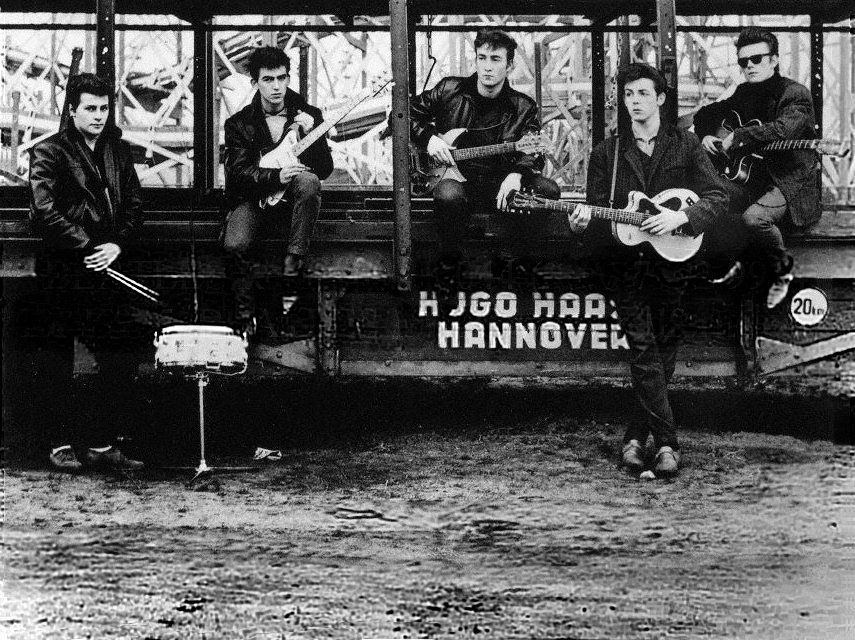
A) Beatles – undoubtedly, the most influential group of musicians in the years after 1950. How many band members in the 1960s and 1970s recounted their first exposure to the Beatles as the beginning of their career in music?
1) Liverpool – in the 1950s, Liverpool was a depressed seaport, with piles of rubble left over from the destruction of WWII, but it supported a huge music scene.
(a) Skiffle – an English interpretation of American folk music (songs like Rock Island Line, etc.). Its biggest star, Lonnie Donegan, performed with more enthusiasm than talent—but that was just the point, and this music inspired hundreds of young people to get a guitar and form a band.

(b) Muddy Water – inspired many of the same young people to perform with amplified music
(c) Search for authenticity – appreciation for indigenous cultural artifact from another culture (namely music) a sign of cosmopolitanism—of “hipness.”

2) Brian Epstein – scion of a family that owned a regional chain of department stores; bored, and afraid that a convicted felon due for release soon would “out” him. Epstein knew little about music, but was a promotional genius.
(a) Cleaning up the Beatles image – before Epstein, the Beatles dressed in black and leather. Epstein prevailed on the band to wear suits and neckties—although they kept the “French cuts” (long hair).
(b) Beatles came across as pleasant, intelligent young men, just cheeky enough to appeal to their generation, but not threatening enough that mother would ban them from the house.

(i) This, of course, left the door open for a band to emerge with a more raucous sound and a dirtier image—namely, the Rolling Stones.
(ii) Beatles themselves were loud and raucous, and they brought a new sense of style to rock and roll that the Rolling Stones also followed—a sense of campiness, that all of this was done as kind of an inside joke, which only “insiders” could pick up on.
3) Do It Ourselves – Lennon and McCartney were determined that their band would perform songs mainly written by themselves—a break with past traditions (for instance, although Elvis Presley received song publishing credit, he didn’t really write any songs himself).
II) Bob Dylan

A) Robert Zimmerman – a bright Jewish kid growing up in Hibbing, Minnesota, listening to black r & b on the radio, as well as country music.
1) University of Minnesota – Zimmerman after high school attended school in Minneapolis, where he discovered what passed for the “bohemian” crowd there, and he began developing the Bob Dylan persona.
(a) Re-emergence of the folk music movement – Folk music first emerged in the early 1950s, but was quashed in the Red Scare led by McCarthy; with McCarthy’s fall, folk re-emerges
(i) Woody Guthrie – Guthrie, a member of the Weavers along with Pete Seeger, cannot re-emerge with the movement he helped inspire because he is stricken with Parkinson’s disease. Dylan, by this time, has copied Guthrie’s repertoire (as well as his style of delivery).

2) Move to New York – after his sophomore year, Dylan moved to New York (really the only city one could make a living as a folk musician); Dylan assumes Guthrie’s mantle, and develops his own repertoire of songs, while retaining much of the persona he appropriated from Guthrie.
3) Stardom – Dylan quickly established himself as the biggest fish in a rather small pond (Joan Baez, Peter, Paul, & Mary, Pete Seeger, etc.), which was good enough until the Beatles arrived.

III) Beatlemania
A) UK – the Beatles built a solid following in the United Kingdom, particularly among young girls, who tended to scream during the entire set (which had gotten shorter, at the insistence of Epstein—about twenty-five minutes, on average).
1) Three things set Beatles apart
(a) Furious energy
(b) Care and diligence that Lennon and McCartney brought to developing their own songs
(c) Demand that they be able to create their own “art”
B) “Phony Beatlemania” – the storied “conquering” of the US is much more complicated than is generally known.
1) Screaming crowds – were hired by Brian Epstein, who also massaged members of the press to spin favorable stories about the band.
2) Successful tour – the initial tour in 1963 was successful, but the Beatles did not initially take the country by storm.
3) “Hard Days Night” – a pseudo-documentary of a day in the life of the band, full of them being chased by young women, and being cute and cuddly. Film was released in 1964, and the band toured US after its release—when the Beatlemania was anything but phony (after American kids were shown how they should act).
4) Critical acceptance – perhaps the most important distinction between rock’s rebirth and its initial creation was that it was an acceptable musical form, particularly as it was performed by the Beatles (not that there was not some opposition to the long-haired freaks, but it was much less vehement the second time around).
IV) Dylan Meets the Beatles
A) Dylan Tours UK – Dylan toured the UK in early 1964, where he was treated by audiences like a rock star—like the Beatles. In fact, Dylan was greatly influential upon the Beatles, who admired his songwriting ability. Dylan, for his part, admired the audience the Beatles were attracting.
1) “I Wanna Hold Your Hand” – Beatles hit, which became ubiquitous in the US in 1964, and which Dylan thought contained the lyrics “Your love, I get High! I get high! I get high!” (instead of “can’t hide”). This becomes an issue of greater amusement after Dylan introduced the Beatles to marijuana in August of 1964. Inserted into one of the songs on the subsequent album, Rubber Soul, was the “I get high!” lyric in the song “It’s Only Love.”

B) Dylan goes electric – in an effort to broaden his audience, upon his return from England Dylan recorded his last acoustic album for many years, Another Side of Bob Dylan, which contained only one overtly political song. In May 1965 he released his first electric album, Bringing It All Back Home, which contained “Subterranean Homesick Blues” which, although a modest success in the US, became his second top ten hit in the UK
1) 1965 Newport Folk Festival – although Dylan was not booed off the stage at Newport while performing with members of the Paul Butterfield Blues Band, his reception was less than enthusiastic, and he pulled the plug after performing only two or three songs (perhaps having more to do with his stoned state than the audience)
(a) Dylan and drug use – Dylan, in an effort to “get to the depths of where you are at” (whatever that means), was increasingly relying upon drugs, particularly marijuana, to get there.
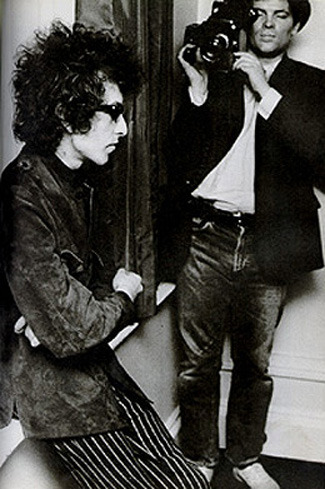
2) 1965 Dylan UK tour – his performance style was becoming increasingly hostile (he refused to perform earlier songs), and his reception there was much less ecstatic than before.
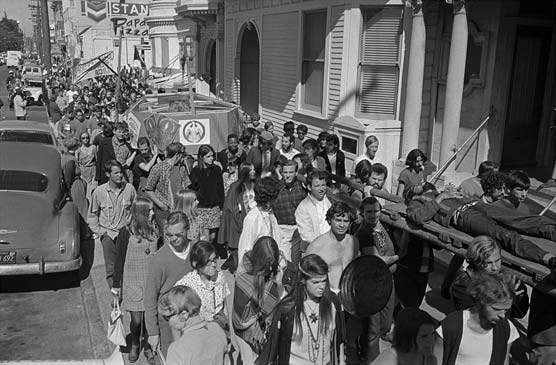
V) Haight-Asbury
A) The Acid Test

1) Ken Kesey and the Merry Pranksters—and LSD
Subscribe to:
Posts (Atom)