I. The Drive for Political Rights
A. Congress of Racial Equality (CORE)--founded in Chicago in 1941 as a bi-racial group; among the founding members was the man who would become the first national director, James Farmer. CORE in the 1940s worked to desegregate facilities in the North, although following a Supreme Court decision, CORE pioneered the earliest challenges to desegregate interstate travel in the upper South by the late 1940s.
1. The Importance of Brown--by the early 1950s, CORE had lost much of its momentum--but was revitalized by the Brown decision.
2. Non-violent resistance--CORE in particular was influenced by the inter-faith pacifist group Fellowship of Reconciliation, which advocated the ideals espoused by Mohandas Gandhi. Although the resistance was non-violent, it provoked a great deal of violence from police and often from white observers. By provoking violence out of proportion to the "crime" (protesting a perceived injustice), greater moral weight is brought to bear to the point of the protest.
a. Eventually, the slow pace of chain, and the extreme violence brought to bear against the protestors, led many to abandon non-violence in favor of "an eye for an eye" (see MLK v. Malcolm X). This became especially prevalent with the rise of black nationalist groups like the Black Panthers.
3. Freedom Rides--CORE organized, and CORE and SNCC together provided volunteers, to ride integrated buses south to provoke southern officials to arrest them for violating local segregation laws, and force the Federal government to enforce the Supreme Court decision that declared these remaining Jim Crow laws unconstitutional.
*B. Student Non-violent Coordinating Committee (SNCC)--founded at Shaw University in Raleigh, North Carolina in 1960 in response number of sit-ins around the South in response to the Woolworth's sit-in, to coordinate all of those protests.
1. Voter registration drive--SNCC volunteers organized voter registration drives around the South, which again provoked hostility from local and state governments in the South
2. Albany Movement--voter drives and civil rights agitation had been ongoing in Albany, GA, for the better part of a decade by 1962. The police chief in Albany, Laurie Pritchett, proved to be the movement's greatest foe, however. Pritchett maintained discipline among his officers, so they did not beat protesters, and he dispersed those he arrested to other counties in southwestern Georgia, which allowed him to arrest all the protesters he wanted. Albany was one of the great setbacks of the modern Civil Rights Movement
3. Birmingham
a. The reaction to the senseless violence in Birmingham--and a new wave of violence and racial hatred in St. Augustine, FL while the Civil Rights Bill was being debated in the Senate.
4. The March from Selma, Alabama--on Sunday evening, March 7, 1965, many Americans were settling in the watch the movie The Judgment at Nuremberg, which was to be shown with limited commercial interruptions ...
when that broadcast was interrupted with newsfilm rushed back from Selma, Alabama ...
a. Voting Rights Act--passed, again, in part as a horrified reaction to events witnessed on the family television.
II. The White Backlash
A. Rise of Black Nationalism--inspired in part by frustrations with the slow pace of change, and in part by the pride of what had been achieved, "black pride" and "black power" became the new buzzwords for many younger activists.
1. Black empowerment--again, the result of several different forces. African Americans now made up the majority of both CORE and SNCC, which was natural because African American rights were what was being fought for. What seemed the inordinate attention paid to the plight of whites involved in the movement was galling.
a. Sexual politics--involvement in the Civil Rights Movement was "consciousness raising" for a number of people involved--both the development of the New Left and Women's Liberation (and later, Gay Liberation) were directly tied to the involvement of many in the Civil Rights Movement. The mutual sexual attraction between black males and white females in the movement created tensions, as well--particularly when someone like Stokely Carmichael made an ill-considered off-the-cuff statement like when asked on what he thought the position of women should be in the movement, and he replied "On their backs."
b. Black Panthers--in response to police repression in a number of northern cities--especially Oakland, where the group originated, the Black Panthers started as a "self-defense" group--but the end result was greater repression, especially for Black Panther members.
B. George C. Wallace--"the most influential loser of 20th century politics" according to his biographer, historian Dan T. Carter. Wallace, a protege of former Alabama governor "Big Jim" Fulsom, a racial moderate by Alabama standards, lost his first race for the governorship by being race-baited; he then vowed (it seems likely) to never be "out-[n-worded]" again.
1. 1962 Gubernatorial primary--was able to "out-[n-word]" opponent John Pattinson (an avowed racist and segregationist), pledging in his inauguration "Segregation today, segregation tomorrow, segregation forever." He was unable to fully deep that pledge, although he did briefly "stand in the schoolhouse door" before stepping aside and permitting the registration of the first black students at the University of Alabama.
2. 1964 US Presidential primary--Wallaces surprising strength in some of the primaries in that year--he garnered a third of the vote in Wisconsin, Maryland, and Indiana--signaled the beginning of the white backlash. Particularly to a former presidential candidate who was sitting out this election in California--Richard Milhouse Nixon, who then began plotting his "Southern Strategy."
a. Wallace ran as an "outsider," and considerably toned down his rhetoric, not promising the continuation of segregation, but instead vilifying "pointy-headed intellectuals" and "limousine liberals," expressing concern over the growth of crime. His pugnacious put-downs of protesters (especially in his 1968 presidential campaign as an independent) also delighted followers.
C. The Long, Hot Summers of the 1960s
1. Watts Riot 1965--just weeks after the passage of the sweeping Voting Rights Act, South Central Los Angeles and Watts exploded in a riot, after rumors of police mistreatment of a black prisoner. Six days, and millions of dollars in property damage later, the rioting was finally quelled.
2. Hough Riot 1966--took place in Cleveland when a racist bar owner in the city declined to serve a black customer, who had just bought a bottle of wine, a glass of water. Cleveland police arrived to "protect property," fueling the crowds anger.
3. Detroit 1967--sparked by a raid on an after-hours party at an illegal bar, years of resentment over police treatment of blacks in the city, combined with the declining economic opportunities in the city (industrial fight had preceded white flight--and both preceded the riot).
D. Death of Martin Luther King, Jr.
1. Memphis "I Am a Man" Sanitation Strike--King, in the years following the passage of the Voting Rights Act, concluded there would be no civil justice for African Americans until there was economic justice--thus the Poor People's Campaign
2. "Early morning, April 4"--James Earl Ray, who had been stalking King for months, ends King's life at the Algiers Motel in Memphis.
*LATE UPDATE--Friday, April 16 was the 50th Anniversary of the founding of SNCC. Clicking on the link provided will take you to a story NPR did on the celebration--including audio.
Thursday, April 15, 2010

Wednesday, April 14, 2010
"With All Deliberate Speed": The Modern Civil Rights Movement, Part 1
I. The Fight for Civil Rights Before 1945
A. Fair Employment Practices Committee (FEPC)--the predecessor to the present-day Equal Employment Opportunities Commission (EEOC), was established to end discriminatory practices in hiring for war-related work
1. 1941--FEPC was established by an executive order, and simply required companies seeking government contracts to promise that they would not engage in discriminatory hiring practices.
 2. 1943--because the initial FEPC was largely ineffective, the president of the Brotherhood of Sleeping Car Porters (the largest black majority union), A. Philip Randolph, began organizing a "March on Washington" to protest the government's lack of commitment to civil rights. After negotiating with the Roosevelt Administration, Randolph called off the protest--and a non-discrimination clause was thereafter placed in every government contract.
II. "With All Deliberate Speed"
 A. The Legal Defense and Education Fund--established in 1938 as a division of the NAACP, the LDF engaged in a series of lawsuits that began to systematically challenge segregation in the United States. The LDF was headed by Thurgood Marshall, and staffed by a number of lawyers dedicated to ending segregation.
1. Murray v. Pearson (1935)--directed by Marshall before the LDF was established, this case opened up the law school at the University of Maryland to African Americans, who had been excluded before, and who had no other law schools in the state to attend.
2. Missouri ex rel. Gaines v. Canada, (1938)--ended segregation in Missouri for graduate programs where there was no graduate programs in black collegew.
3. Alston v. School Board of City of Norfolk (1940)--decreed that teachers in segregated schools were to be paid the same salary as teachers in white schools.
 B. Brown v. Board of Education--while not all cases argued before the Supreme Court by the LDF involved segregation in schools, it does become apparent that this was part of an overall strategy by Marshall and his lawyer to remove the legal underpinnings for the continuation of the segregation of public schools.
1. Topeka, Kansas--was one of twelve cities in Kansas authorized by the state legislature to establish segregated schools. Kansas was not the only northern state that permitted segregation; Indiana also permitted segregated schools in Indianapolis and in Gary.
2. Combined cases--the decision known as Brown v. Board of Education combined 5 different cases: one from Topeka, South Carolina, Virginia, Delaware, and Washington, D.C. Oliver Brown's name was place as the lead plaintiff in order to place a male name at the front of the document, which the legal defense team thought the court would favor.
3. Brown I (1954)--a unanimous decision, achieved when Chief Justice Fred C. Vinson died and President Dwight D. Eisenhower replaced him with former California governor Earl Warren. Warren was governor when Japanese-Americans were removed from the coast and interred in concentration camps inland, and was haunted by his contribution to that decision. Brown I ended legal segregation of schools in the United States.
4. Brown II (1955)--the following year, segregated school systems sought relief from having to immediately comply with the Brown decision; the Court granted that school systems should comply "with all deliberate speed."
III. The African American Response to Brown
 A. Montgomery Bus Boycott (Dec. 1955-Jan. 1957)--this 13 month boycott ended Jim Crown segregation on Montgomery city buses, and is also noted for the introduction of Rev. Martin Luther King, Jr. to the civil rights cause.
1. Rosa Parks--the exhausted seamstress who refused to give up her seat to a white man was also a NAACP activist who worked part-time as secretary for the chair of the Alabama NAACP, E.D. Nixon.

2. E.D. Nixon--one of the principal organizers of the boycott, Nixon was a retired porter and member of the Brotherhood of Sleeping Car Porters, where he learned to organize under the tutelage of A. Philip Randolph.
 3. Rev. Martin Luther King, Jr.--the most famous name to emerge from this event, but he came to it only reluctantly; after initially turning E.D. Nixon down, King only agreed to become the face of the boycott after every other pastor also turned down Nixon's offer.
B. Little Rock Central High School
C. Woolworth's Sit-in, Greensboro, NC (1960)
1. Inspiration--the action of the Greensboro 4 inspired a number of other college students--mostly African Americans, but with some whites--to challenge similarly segregated facilities around the South.
A. Fair Employment Practices Committee (FEPC)--the predecessor to the present-day Equal Employment Opportunities Commission (EEOC), was established to end discriminatory practices in hiring for war-related work
1. 1941--FEPC was established by an executive order, and simply required companies seeking government contracts to promise that they would not engage in discriminatory hiring practices.

II. "With All Deliberate Speed"

1. Murray v. Pearson (1935)--directed by Marshall before the LDF was established, this case opened up the law school at the University of Maryland to African Americans, who had been excluded before, and who had no other law schools in the state to attend.
2. Missouri ex rel. Gaines v. Canada, (1938)--ended segregation in Missouri for graduate programs where there was no graduate programs in black collegew.
3. Alston v. School Board of City of Norfolk (1940)--decreed that teachers in segregated schools were to be paid the same salary as teachers in white schools.

1. Topeka, Kansas--was one of twelve cities in Kansas authorized by the state legislature to establish segregated schools. Kansas was not the only northern state that permitted segregation; Indiana also permitted segregated schools in Indianapolis and in Gary.
2. Combined cases--the decision known as Brown v. Board of Education combined 5 different cases: one from Topeka, South Carolina, Virginia, Delaware, and Washington, D.C. Oliver Brown's name was place as the lead plaintiff in order to place a male name at the front of the document, which the legal defense team thought the court would favor.
3. Brown I (1954)--a unanimous decision, achieved when Chief Justice Fred C. Vinson died and President Dwight D. Eisenhower replaced him with former California governor Earl Warren. Warren was governor when Japanese-Americans were removed from the coast and interred in concentration camps inland, and was haunted by his contribution to that decision. Brown I ended legal segregation of schools in the United States.
4. Brown II (1955)--the following year, segregated school systems sought relief from having to immediately comply with the Brown decision; the Court granted that school systems should comply "with all deliberate speed."
III. The African American Response to Brown

1. Rosa Parks--the exhausted seamstress who refused to give up her seat to a white man was also a NAACP activist who worked part-time as secretary for the chair of the Alabama NAACP, E.D. Nixon.

2. E.D. Nixon--one of the principal organizers of the boycott, Nixon was a retired porter and member of the Brotherhood of Sleeping Car Porters, where he learned to organize under the tutelage of A. Philip Randolph.

B. Little Rock Central High School
C. Woolworth's Sit-in, Greensboro, NC (1960)
1. Inspiration--the action of the Greensboro 4 inspired a number of other college students--mostly African Americans, but with some whites--to challenge similarly segregated facilities around the South.
Thursday, April 8, 2010
Weekly Assignment #11
Going to the Source, Chapter 11, question 3 (Due April 15). If you have already completed ten weekly assignments, then each written assignment will count for 25 points, rather than 20. If you complete four of the additional weekly assignments, then you may use them to replace the final exam; if you so choose, you may also use them as "extra credit" in addition to the final examination.
The Murder of Emmett Till


Monday, April 5, 2010
Rock and Roll and 1950s Culture
I. The Working-class in the South
A) Poor black southerners
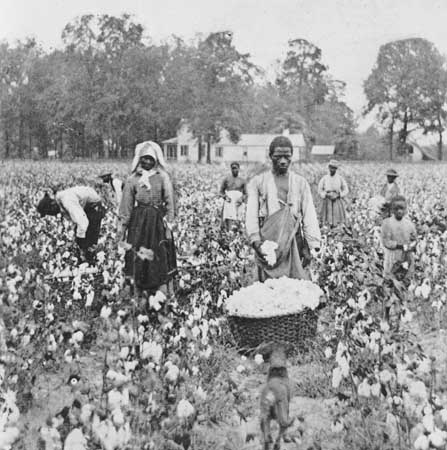
2) Musical traditions – work songs, which helped regulate the pace of labor (as well as help the time pass more quickly); sacred music; both forms used “call and response.”
3) Itinerant musicians – the Delta area, before the advent of the juke box and radio, had a tradition of musicians who traveled from plantation to plantation to play music for Saturday night fish fries, and at “juke joints.” For many men (and a few women), this was the only chance for them to avoid a life of back-breaking, ill-paying labor
(a) Charley Patton
(b) Robert Johnson

(d) B.B. King
(e) Muddy Waters
(f) Howlin’ Wolf
4) Movement off farms into cities – so-called “chain” migration—migrants often first moved into cities in the South, and then into cities in the North from there
(a) Pull of wartime employment – as jobs opened up to African Americans in factories and docks in the North, many left farms to fill these jobs in the North.
(b) Push of mechanization – after the war, cotton cultivation became increasingly mechanized, which meant that it was cheaper for large landowners (plantation owners) to buy tractors, cultivators, etc., and dismiss their sharecroppers—which in turn meant that these sharecroppers were forced to move off the land that they had cultivated; many chose to move into cities.
B) Poor white southerners – segregation, that we think of as personifying life in the South (and in the North, for that matter), is really an urban phenomenon than something that takes place in a rural environment; poor southern whites often found themselves in similar situations as their African American neighbors.
1) Tenant farmers – depressed farm prices had earlier forced many tenant farmers off farms and into cities, north and south.
2) Musical traditions
(a) Secular – “hillbilly” music; without radio, many people had to entertain themselves, and their neighbors. White musicians in the south had a long tradition of learning music from their African American neighbors

3) Movement off farms and into cities – for many of the same reasons that African Americans moved into cities; same kind of chain migration as was the case with African Americans.
(a) Wartime employment
(b) Mechanization of farming in the south
II) Radio – radio became the vehicle for popularizing “race” music among a wider audience

1) WDIA – white-owned radio station in Memphis

1) Chess Records--in 1955, Berry followed Johnson to Chicago, where he met Muddy Waters. Waters introduced Berry to Leonard Chess, one of the brothers who ran the record label where both Waters and Johnson now recorded. Berry played a variety of his songs for Chess, but Chess was particularly drawn to Berry's rendition of a traditional country song called "Ida Red." After altering the lyrics, the company released the now-titled "Maybelline" and gave New York disk jockey Alan Freed partial writing credit for the song to encourage him to play it often. As the tired phrase says, the rest is history.
C) Sam Phillips and Sun Records

(a) How does Phillips know that such a person exists? – because he himself enjoys such music, and is confident that other white southerners feel the same way, and are performing such music out there somewhere.
III) Elvis
A) Childhood – Elvis was an only child (his twin brother, in fact, died soon after he was born) brought up by a doting, domineering mother and a largely absent father.
1) Pentecostal church upbringing – Elvis attended sanctified churches with his parents, where he would have been exposed to the emotionally charged services that these churches are known for.
2) Working-class upbringing – Elvis’ childhood was rather economically distressed, his father worked a series of rather low paying jobs. Elvis grew up in Tupelo , MS
3) Father imprisoned – when Elvis was growing up, his father was imprisoned for several years after an attempted robbery, which did not affect the social standing of the family in the city, but only confirmed their outsider status there.

1) Memphis was a was becoming one of the most industrialized cities in the South (outside of Birmingham, Alabama and Atlanta, Georgia), and a stopping point for white and black migrants from the Mississippi Delta region, western Tennessee, eastern Arkansas, and southeastern Missouri. It was a major port on the Mississippi, as well as the largest shipping point on the Illinois Central Railway between Chicago and New Orleans.
C) Recording of song for mother – to surprise his mother on her birthday, Presley recorded a song at the Memphis Recording Service—which led eventually to his being courted by owner Sam Phillips to record some music with two musicians that he had worked with
D) The Sun Records years – (both of them) Elvis cut only six singles with Sun, but they changed popular music forever.
1) The marriage of white and black sensibilities – Elvis was able to cross boundaries that were thought to be impossible to cross; it was probably no accident that his first successful recording included a countrified version of a rhythm and blues hit, and a rhythm and blues treatment of a country hit.
2) Elvis’ demeanor

(b) Use of make-up – like Little Richard (although perhaps for different reasons), Elvis used make-up (eye-liner and eye-shadow) not only when he was performing, but in everyday life.
(i) Explanation of Elvis androgynous appeal – males tended to like Presley’s music, if not his performance style (which females reacted to vociferously)
3) Inspiration of others – many other white performers followed Presley to Sun Records, and eventually to other record companies, as well
IV) Race, Class, and Rock ‘n Roll
Thursday, April 1, 2010
The Cold War at Home
I. 1945-46 Strike Wave--effected most industries, and was a result of worker's pent-up demands for wage increases to catch up with the wartime price spiral, and because industry did not want to grant wage increases until price restrictions were removed
A. Steel Workers
1. Little Steel--the steel companies besides US Steel were hoping to break the union (the companies of Little Steel had resisted unionization to the bitter end
B. Electrical Workers
C. Rubber Workers
D. Auto Workers
1. "Open the books"--Reuther demanded at the bargaining table that General Motors present proof that it could not grant the demanded wage increase because of financial considerations--and that proof would be GM "opening the book," or financial ledgers, of the company.
E. General strikes
1. Pittsburgh, Pennsylvania
2. Rochester, New York
3. Lancaster, Pennsylvania
4. Oakland, California
II. 1946 Election--A Right Turn?
A. Office of Price Administration (OPA)--fearing that inflation would cause a recession that would stunt peacetime recovery, the wartime agency--now headed up by former Toledo mayor Michael DiSalle--was kept in the hope that it could control inflation; the agency was unsuccessful in this attempt, however.
B. Post-war recession--with wartime contracts ended, industry cut back production in the anticipation that there would be a recession--despite the fact that these contracts guaranteed these companies a profit for the next year.
C. Democratic control--as the party that controlled both houses of Congress, as well as the White House, the Democratic Party received the blame for things that went wrong from the end of the war to the 1946 election.
1. "Coziness" with labor--labor was already seen as exceedingly close with the Democratic Party, and therefore the party was blamed in the mainstream press and by the business class for not "controlling" labor in 1946.
2. 1946 Election--Republicans win majorities in both houses of Congress for the first time since 1930. It is generally argued by political scientists and historians that general weariness with "change" as well a desire to "give the other guys a chance," along with Truman's unpopularity, also contributed. These factors did effect turnout of Democratic voters, and allowed Republicans to gain control of the Senate (they increased their control in the House of Representatives, which they had won in the 1944 election--despite FDR prevailing in the presidential election).
D. 1947 Legislation
1. Taft-Hartley Act--amended the National Labor Relations Act to disallow sympathy strikes and boycotts. Gave states the right to outlaw the union shop, the so-called "right to work" (without belonging to a union).
E. 1948 Election
1. Democratic Party Split
a. Progressive Party
b. State Rights ("Dixiecrat") Party
2. Civil Rights plank
a. Desegregating the Armed Forces
3. Lackluster Republican campaign--combination of what Truman labeled the "do-nothing" Congress, and a lackluster campaign by Thomas Dewey, who was running not to lose rather than to win.
III. The Post-war Red Scare
A. Communist spies
1. Rosenberg trial--the conviction of Julius and Ethel Rosenberg
B. Rise of Joe McCarthy
1. Early political career
2. Wheeling (WV) speech
3. Army-McCarthy hearings
A. Steel Workers
1. Little Steel--the steel companies besides US Steel were hoping to break the union (the companies of Little Steel had resisted unionization to the bitter end
B. Electrical Workers
C. Rubber Workers
D. Auto Workers
1. "Open the books"--Reuther demanded at the bargaining table that General Motors present proof that it could not grant the demanded wage increase because of financial considerations--and that proof would be GM "opening the book," or financial ledgers, of the company.
E. General strikes
1. Pittsburgh, Pennsylvania
2. Rochester, New York
3. Lancaster, Pennsylvania
4. Oakland, California
II. 1946 Election--A Right Turn?
A. Office of Price Administration (OPA)--fearing that inflation would cause a recession that would stunt peacetime recovery, the wartime agency--now headed up by former Toledo mayor Michael DiSalle--was kept in the hope that it could control inflation; the agency was unsuccessful in this attempt, however.
B. Post-war recession--with wartime contracts ended, industry cut back production in the anticipation that there would be a recession--despite the fact that these contracts guaranteed these companies a profit for the next year.
C. Democratic control--as the party that controlled both houses of Congress, as well as the White House, the Democratic Party received the blame for things that went wrong from the end of the war to the 1946 election.
1. "Coziness" with labor--labor was already seen as exceedingly close with the Democratic Party, and therefore the party was blamed in the mainstream press and by the business class for not "controlling" labor in 1946.
2. 1946 Election--Republicans win majorities in both houses of Congress for the first time since 1930. It is generally argued by political scientists and historians that general weariness with "change" as well a desire to "give the other guys a chance," along with Truman's unpopularity, also contributed. These factors did effect turnout of Democratic voters, and allowed Republicans to gain control of the Senate (they increased their control in the House of Representatives, which they had won in the 1944 election--despite FDR prevailing in the presidential election).
D. 1947 Legislation
1. Taft-Hartley Act--amended the National Labor Relations Act to disallow sympathy strikes and boycotts. Gave states the right to outlaw the union shop, the so-called "right to work" (without belonging to a union).
E. 1948 Election
1. Democratic Party Split
a. Progressive Party
b. State Rights ("Dixiecrat") Party
2. Civil Rights plank
a. Desegregating the Armed Forces
3. Lackluster Republican campaign--combination of what Truman labeled the "do-nothing" Congress, and a lackluster campaign by Thomas Dewey, who was running not to lose rather than to win.
III. The Post-war Red Scare
A. Communist spies
1. Rosenberg trial--the conviction of Julius and Ethel Rosenberg
B. Rise of Joe McCarthy
1. Early political career
2. Wheeling (WV) speech
3. Army-McCarthy hearings
Tuesday, March 30, 2010
The Global Cold War

I) The Cold War in Europe
A) Truman and Communism
1) Distrust of Stalin – although FDR had developed a relationship of statecraft with Stalin, Truman did not develop the same level of trust as his predecessor; in fact, Truman believed that Stalin was one of the most dishonest, evil men that he had ever known (a fact that is hard to argue with, certainly).
(a) Cancellation of Soviet Lend-Lease Aid – at war’s end, Soviets denied any further access to lend-lease aid, which shut off their access to US military hardware.

(a) “Iron Curtain” speech – in a speech at a tiny college near St. Louis, Churchill delivered his famous Iron Curtain speech, where he encouraged isolating Western European countries from those under the domination of the Soviet Union.
3) Nuclear terror – the US insisted, since it was the lone country that could possibly hold the interests of the whole world ahead of its own self-interests (or that its self-interests alone were of concern to the rest of the world), insisted that this country, alone, should control these new weapons of mass destruction.

(b) Escalation by the US – after the Soviet Union acquired nuclear capability, the US went ahead with the development of the more powerful Hydrogen bomb, which had ten times the killing power of the atomic bomb.
4) Policy of containment – an increased confidence on the part of the military and diplomatic elite after the US successes in the second World War led to a belief that the military might, or the threat of the use of military might, of the US could “contain” the influence of the Soviet Union as it was constituted in 1946.

(b) Truman Doctrine – the Truman doctrine went hand-in-glove with the policy of containment. The Truman doctrine pledged to aid countries in their fight against “communist aggression.”
(i) Plan was formulated in response to an ongoing civil war in Greece, which pitted forces that had fought against fascists in the world war (led by a number of communists) against those forces that had collaborated with the fascists forces (which of course was anti-communist, and therefore backed by the US government). The aid the anti-communist forces received helped them to prevail in the struggle.
(c) Marshall Plan – named after Truman’s secretary of state, Gen. George C. Marshall; was a $16 billion dollar plan (that’s $140 billion in today’s dollars) plan for the reconstruction of Europe. Money was even offered to countries in the so-called Soviet bloc, if they would agree to strengthen economic ties with the West. This plan worked great for countries with strong social democratic traditions (like Great Britain, France), but it mainly strengthened the grip of right-wing dictators around the world.
II) Cold War in Asia – The Cold War was by definition a global conflict, and the United States took a much more active role in Asia after the World War than it ever had before—perhaps because the Soviet Union, like the United States, also was a Pacific Ocean power.

1) NSC-68 – a proposal by the National Security Council to triple the amount of money that the United States spent on defense. This increased defense spending in fact acts as a sort of welfare program for selected parts of the US industrial complex (mainly aeronautics, but also some other manufacturing concerns).
B) The “Domino Theory” – the need to oppose communism anywhere and everywhere it arose was fed by the fear that if communism were tolerated in one country, it would spread country by country, like dominoes toppling one after another, until the threat undermined the freedoms of the people of the United States.

D) Wars to end colonial domination – Because of the focus upon the battle against communism, the US government tended to support the re-establishment of colonial rule around the globe, rather than the indigenous populations which looked to the Declaration of Independence and the US Constitution for inspiration.
1) The French in Indochina

Thursday, March 25, 2010
Wednesday, March 24, 2010
The Homefront
I) The Home Front
A) Centralized planning – 1941 was a banner production year for the auto industry, which was reluctant to abandon civilian production to make war material, and did so only under duress (and the promise of guaranteed profits of cost-plus contracts).
B) “Dollar-a-year-men” – executives from the US firms who came to Washington to help the military plan the economy; this "sacrifice" on the part of business men (their salaries were actually paid by the companies that they left) did much to rehabilitate the reputation of business in the minds of the general populace after the Great Depression
1) War Production Board – set prices and determined production, since the entire economy was planned from Washington.
2) Suspension of anti-trust laws – encouraged the formation of larger firms, which officials in the military believed would better meet their production criteria—and which made procurement by the government easier, since they had to deal with fewer firms.

4) Cost-plus contracts--in order to compensate companies who changed over their production to war material, and to encourage continued cooperation, contracts were let with a government guaranteed profit; that is, the companies were compensated at their cost, plus a guaranteed profit.
C) War Labor Board – arbitrated labor-management disputes; set wage rates for all workers. In return, labor officials promised to abide by a “no-strike” pledge, which individual workers supported, except when it involved their own grievances at work.
1) The No-Strike Pledge--in the first blush of patriotism, unions promised not to strike for the duration of the war. While this sounds doable in theory, workers quickly found that by giving up the right to strike, they also lost their best tool for keeping wages up with inflation, and the quickest way to effect changes in working conditions.
D) Office of Price Administration – set price ceilings for almost all consumer goods, in an effort to control inflation--with little success.
E) Selective Service – FDR administration followed the practice of Woodrow Wilson, and instituted a wide-ranging conscription program.
1) The "Double V" campaign--African American leaders encouraged participation in this Selective Service campaign with the "Double V" campaign--victory over fascism, and then victory for the civil rights of African Americans at home.

a) Jackie Robinson--was nearly court-martialed for his resistance to riding in the back of the bus at the Southern military base he was initially assigned to when he entered the Army.

F) War Manpower Commission – determined which workers work was vital to the war effort (which would prevent them from being drafted); also determined when a worker could change jobs.
G) Concentration of the Economy
1) Procurement system – fostered further concentration of the US economy; by the end of the war the top 100 companies held 70% of all civilian and military contracts, compared with 30% five years before.
2) Industrial boom--with government contracts being placed for material and factories, and much of the male civilian population being drafted or (after December 1941) choosing to join the military, economic conditions improved greatly.
(a) By 1943 unemployment disappeared

3) Real income growth – 27% between 1939 to 1945
(a) Redistribution of wealth – income of those at the bottom of the wage scale grew at a faster rate than the heavily taxed incomes at the top of the scale.
(b) Taxation--in order to pay for the war, War Bonds were famously issued. Often overlooked, however, is the fact that taxation was greatly extended as well; Americans who earned as little as $500 per year paid income tax at a 23 percent rate, while those who earned more than $1 million per year paid a 94 percent rate. The average income tax rate peaked in 1944 at 20.9 percent.
H) Americanization push – although there were ugly, racist aspects of this new push toward Americanization, it was not anti-European immigrant; in fact, most propaganda celebrated the ethnic diversity of America.
 1) Sojourner Truth Homes--Detroit became a tinderbox of potential conflict because of the number of new workers moving into the city and inadequate housing. The Sojourner Truth projects were one point of contention, with blacks claiming (rightfully) a desperate need for adequate housing, and whites assuming that the housing built in "white" neighborhoods would continue to be used for whites. When black began moving into the project, it set off a riot. This conflict simmered into the summer, when another riot was set off on Belle Isle.
2) Zoot Suit Riots--took place in Los Angles, involving Mexican-American youths dressed in "zoot suits" and soldiers and sailors on temporary leave. A zoot suit, with
H) Americanization push – although there were ugly, racist aspects of this new push toward Americanization, it was not anti-European immigrant; in fact, most propaganda celebrated the ethnic diversity of America.

2) Zoot Suit Riots--took place in Los Angles, involving Mexican-American youths dressed in "zoot suits" and soldiers and sailors on temporary leave. A zoot suit, with


1) Male resistance – women who moved into these jobs faced tremendous amounts of resistance from the males who remained on these jobs (give examples of harassment)
2) Working mothers – faced problems relating to the lack of childcare, and the related problem of the alleged juvenile delinquency that their neglect caused.
3) Role of women in society – remained largely unchanged; many saw women in these kinds of positions as a temporary war expediency, and expected women to willingly return to the kitchen and nursery at the war's end.
Tuesday, March 23, 2010
The Second World War

I. Roosevelt turns to internationalism – the growing international crisis during the latter 1930s gained more and more of Roosevelt’s attention as his New Deal policies began stalling; Roosevelt’s background left him well-prepared to handle this problem, as well
A. Threat of Fascism – the world-wide economic crisis of the 1930s led many countries to experiment with new forms of government; one of the most popular was what we call fascism.
1. Definition of fascism – government control of all aspects of life, promising a “third way” between Marxism and capitalism, emphasizing the organic national community; it glorified war and violence; it embraced the irrational (like the occult), and the presumption of revolutionary change.
B. Italy
1. Rise of Mussolini
a. Fascism – rigid, one-party rule which crushes opposition (especially on the left), retention of private ownership of means of production (which differentiates it from the tenets of Marxism), but which operates under centralized government control; belligerent nationalism (and sometimes racism); and the glorification of war.

c. Invasion of Ethiopia – the last independent state on the continent of Africa in the 1930s, but it received no help from other countries to fight of Italian aggression.
C. Germany
1. National Socialism (Nazi)-- Hostile to all forms of democracy--and to all forms of communism.

3. Appeals to pride in German culture
4. Racism – believed in the “natural” superiority of the “Aryan” race (whatever that is); racism was a much more important ideology for German fascists than it was for Italians.
a. Compare Nazi ideas of the superiority of Aryans to the belief (backed by scientific “proof”) that Anglo-Saxons were destined by biology to rule the earth.
(b) Burning of the Reichstag – fire of suspicious origin (which has been probably rightly been blamed on the Nazis) destroyed the meeting place for the equivalent of the German congress, which then did not meet any longer.

(i) Signaled the beginning of a more aggressive anti-Semitism on the part of the German government
(ii) Point of comparison – until Kristallnach, Jews in Germany suffered less discrimination in that country than they suffered in the United States (no restrictions on residence, or clubs they could not join).
(e) Repudiation of the Versailles Treaty – moved arms into the de-militarized Ruhr Valley, also began claiming the right to “lebensraum” or living space, pieces of land that Hitler thought other European powers would not go to war to prevent him from claiming.
D) Japan

(a) Invasion of Manchuria – Manchuria lies between China and Russian Siberia, and had traditionally been part of China; had the richest deposit of minerals in Asia.
(b) 1937 Sino-Japanese War – the “Rape of Nanking” which resulted in 300,000 deaths of Chinese civilians; numerous women were carted off to serve as “pleasure girls” (prostitutes for the Japanese army—a practice which they also practiced in other areas in Asia)
2) Racist stereotyping
(a) Japanese superiority – Japanese thought that the Chinese were an inferior people, who gave them the rights to dominate; in the Japanese view, westerners like the US and British were decadent westerners who would crumble when confronted by the pure Japanese spirit.
(b)US racism – US saw Chinese has helpless peasants, largely incapable of self-government; the Japanese, on the other hand, were the “yellow peril,” devious, and set upon ruining the West by exporting their cheap goods, and not buying enough western goods.
E)--Spanish Civil War – the Spanish Civil War served as a surrogate battle between fascist and communist forces, with the fascist forces prevailing.
F) Isolationism – the foreign policies of the US government had long promoted isolationism from foreign entanglements, and this; although this had begun to dissipate, it had not disappeared.
1) US Senate rejected membership in the World Court
II)Neutrality Acts – mandated an arms embargo against both victim and aggressor in armed conflict; stipulated a narrower interpretation of neutrality rights; “cash and carry” trade policy for belligerents that would deprive them of access to US credit, ships, and military goods.
III)Pacific Theater of Operation (PTO)

1) Initial Japanese successes
(a) Indonesia (Dutch)
(b)Indochina (French; spawned the creation of the Vietminh, who with US backing carried on a guerrilla war against Japanese—Vietminh were led by a previously exiled, French-educated Vietnamese who renamed himself Ho Chi Minh
(c) Hong Kong, Malay, and Burma (Great Britain)
(d)Most of eastern China (China)
(e)Philippines (US)
2) US turns tide
(a) Battle of Coral Sea – depleted navy fleet won its first battle of the PTO

3) 1943 – US, with major assistance from Australia and New Zealand, and from many of the indigenous populations of the various Pacific islands and East Asia continental areas, regains the iniative.
B) Island hopping – the strategy of choosing to battle Japanese fortifications on some islands, while skipping (or “hopping”) over others.
1) Amphibious assault
IV) European Theater of Operation (ETO)
A) Soviet Union – from mid-1941 on, the Soviet Union bore the brunt of the war with Germany
1) “Scorched earth” tactics – much of the eastern front had to be given up by the Red Army in a series of strategic retreats, but the Soviets burned to the ground anything that they could not carry with them, which prevented the German Army from obtaining the material, which caused the supply lines of the Germans to be stretched dangerously thin.

B) Air War – to relieve some pressure on the Soviet Union before the Allies were ready to open a second front in Europe.
1) “Precision bombing” – a misnomer; when attacks on industrial areas increased, Germany decentralized its industry, which led to the Allied bombing of population centers—like Dresden in Vonnegut’s Slaughterhouse Five (much of the same thing was happening in the United States, as the government paid industry to build new factories in previously rural areas).
C) Allied invasion of Europe
1) D-Day at Omaha Beach – (clip from Saving Private Ryan).
Subscribe to:
Posts (Atom)