Monday, April 19, 2010

America and the War in Vietnam


A)   Vietminh and the OSS

1)     Ho Chi Minh – Ho was a Vietnamese nationalist who admired the works of Marx, and wanted to establish a socialist state in his country

2)     Vietminh armed forces – with military supplies from the US, the Vietminh fought an effective guerilla war against the Japanese.

B)   Japanese surrender – when the Japanese surrendered, the Vietminh expected the US to continue to support them in their effort to establish an independent country

II)               French attempt to re-colonize – the Vichy government (the government which controlled France during the Nazi occupation of that country) had surrendered to the invading Japanese, but many French rubber plantation owners had in fact cooperated with the Japanese, and were allowed to maintain their property.

A)   Vietminh resistance – not surprisingly, the Vietminh resisted the attempted French re-colonization, and maintained their guerilla war against the occupying forces.

B)   US aid to France – the US provided some military assistance to their NATO alliance partners, in the form of credits and some military advisers

1)     Geo-political decision – the officials of the US government decided that it was more politically important, in our “Cold War” against the Soviet Union, to make nice with France in their struggle to re-assert colonial control, than to ally with a small, insignificant country with which we had no economic interest, nor any real political interest.

C)   French military offensive

1)     1946 – while the Vietminh were still expecting the US to side with them in the dispute, the French forces in Vietnam were able to drive the Vietminh forces out of most of the cities in the country

D)   French military defeats – after their initial victories against the Vietminh, the French suffered a series of devastating defeats; in response, the French government changed military commanders in the country.

1)     “The light at the end of the tunnel” – soon after taking command of French forces, commander Gen. Henri Navarre declared that “Now we can see victory clearly, like the light at the end of the tunnel.”  That is not the last time that phrase is heard in relation to conflicts in Vietnam.

2)     Dien Bien Phu – in the jungle near this small hamlet, a large French force was surrounded by Vietminh forces, and after an extensive two-month siege, the Vietminh forced the French survivors to surrender on May 7, 1954.

3)     Geneva Accords – at the insistence of the United States, the country of Vietnam was divided “temporarily” along the 17th Parallel, and nationwide elections to choose a government for a unified Vietnam were to be held in 1956

III)            Vietnam and the Domino Theory – the so-called Domino Theory was an ideology subscribed to by both liberals and conservatives; a politician who could be portrayed as “soft on communism” effectively signed their own political death warrant.

A)   Government of South Vietnam – largely a paper tiger, if not a myth.  The government in South Vietnam never enjoyed any widespread popular support; if it were not for the millions and eventually billions of dollars that the US poured in to the country, it would have collapsed of its own inertia long before 1975, when the North Vietnamese Army finally rolled into Saigon.  As a secret government study conducted by the Pentagon, and leaked as the famous “Pentagon Papers,” the “government” of South Vietnam was largely a creation of the United States government.

1)     Premier Diem – Vietnamese Catholic, he organized a “national referendum” that led to the creation of the Republic of Vietnam.  He then won a rigged election to head that government, and maintained control only with US support (eventually, that support from the US amounted to over $1 million a day)

(a)  Diem’s only support in the country come from other Vietnamese Catholics (a very small percentage of the population, by the way), and other Vietnamese who had collaborated with the French

2)     US $$$ -- the United States was positive that given a choice, no country would want to pass up the political and economic advantages that could be provided by alliances with the US

3)     National Liberation Front – in December of 1960, the National Liberation Front was established by forces loyal to Ho in the south; they were popularly known in the US by the derogatory term given them by forces loyal to Diem in the south, Viet Cong (which became “VC” or “Charlie,” eventually, in US GI slang)

B)   Kennedy and Counterinsurgency – Kennedy was elected over Richard Nixon (barely) in part because of his promise to “close the window of vulnerability” that he claimed existed and threatened the security of the US.

1)     Counterinsurgency – the creation of a Special Forces branch in the Army, which supposedly would be able to respond to Communist aggression around the globe

(a)  “Green Berets” – to train South Vietnamese forces in techniques of counterinsurgency, and dry up the sea of support which the National Liberation forces swam in (an allusion to an idea Mao espoused, where he compared guerilla forces to fish in a sea, undetectable among other fish.

(b) Cowboys and Indians – the Vietnamese forces were an unconventional enemy that enjoyed widespread support among the people of the rural countryside—which in Vietnam, meant most of the people living in the country.

(c)  Lack of success – the lack of success that the South Vietnamese forces enjoyed in their counterinsurgency battles meant that more and more money and material was flowing into the country from the US, as were more and more military advisors, to “support” the Army of the Republic of Viet Nam (ARVN).

IV)            Escalation of US Involvement

A)   Gulf of Tonkin – the USS Maddox was allegedly “attacked” while offshore from North Vietnam, in disputed seas (North Vietnam claimed the area as sovereign territory, while the US maintained that the waters were international waters).

1)     Gulf of Tonkin Resolution – after the alleged attack, President Johnson asked Congress for, and received, authorization from Congress to “take all necessary measures to repel armed attacks against the forces of the United States and to prevent further aggression.”

(a)  Gulf of Tonkin Resolution was passed unanimously in the House, and only two dissenters in the Senate (both of whom lost in the next election that they faced.
B)   Da Nang

1)     USMC – on March 8, 1965, a large force of Marines landed at Da Nang to reinforce an airfield there; by March 13 the Marine expeditionary force was joined by 40,000 other troops, and by late June of that year the Army commander in Vietnam, Gen. William Westmoreland, had received authorization to commit American forces to battle wherever he saw fit.
C)   The Undeclared War – as more troops were committed, soldiers and Marines from the United States began to assume more of the responsibility of the fighting in this undeclared war

1)     Search and destroy missions – troops from the US forces engaged in the small troop tactic of so-called Search and Destroy missions, where platoons ventured into the jungles of Vietnam, looking for enemy to engage and hopefully kill, or at least locate so that air support could be called in.  Most of the time, these patrols found nothing.  The fault of these tactics was, of course, that the enemy only engaged their pursuers at the time and place of their choosing

2)     The Air War – the US dropped four times the amount of bombs in Southeast Asia than were used by all belligerents during World War II; but this bombing campaign was relatively ineffective against an enemy that was fighting a low tech war anyway—there simply was not much infrastructure to destroy.

3)     Weekly body count – each Friday, the military released figures of casualties, which was how the “score” was kept.  Each week, the total number of casualties for the North Vietnamese Army and the National Liberation Front, which inevitably were higher than the combined totals for the United States and the ARVN—so we were winning the war, right?

4)     Selective Service – because of college student deferments, the burden of service in this war fell inordinately upon the working-class; in fact, Harvard, Yale, and Princeton (the three premier universities in the country) between them only had one alumnus die.  George W. attended Yale, drank his way through four years, and then conveniently “served” in the Air National Guard; Albert Gore, Jr. graduated from Princeton, and served in Vietnam—as a correspondent for Stars and Stripes, the newspaper written for members of the military.

D)   Tet – Tet is the name for the Vietnamese New Year; after 1968 the word Tet is associated with the beginning of the end of US involvement in the war in Vietnam.

1)     “The light at the end of the tunnel” – in January 1968, Gen. Westmoreland declared that the end of the war, now three years along in the involvement of US forces, was at hand, that officers there were confident that they were able to see the light at the end of the tunnel.

2)     The Tet Offensive – just after Westmoreland made his observance about the end of the war, the National Liberation Front launched its Tet Offensive.  This offensive caught the US and South Vietnamese forces completely by surprise, and NLF forces captured several cities in the south (including the center of religious life in Vietnam, Hue), and threatened to capture Saigon.  The NVA had coordinated an attack at a Marine camp called Khe Shanh at this time, and held it under siege for several weeks.

3)     Result – the effect of the Tet Offensive, from a military view, was a crushing defeat for the NLF and NVA; the US forces eventually defeated the combined force, and retook all of the lost territory; the NLF in particular was decimated.

(a)  The end of US involvement – it became obvious to even the most casual observers that the end of the war was no where close to happening; popular support for continued US involvement in the war began to shift dramatically from this point.


V. “Peace With Honor” and the 1968 Election

A)   LBJ—at the end of March, Johnson announced the “if nominated, I will not run; if elected, I will not serve”—that he was withdrawing from the 1968 presidential race.

1)     “Clean for Gene”—US senator Eugene J. McCarthy, disenchanted with Johnson’s leadership on the war, decided to oppose Johnson for the Democratic nomination. In the New Hampshire primary, McCarthy ran an unexpectedly close second, thanks largely to his superior “ground game” staffed largely with college students, many of whom had “cleaned up” their image to campaign door-to-door in the state.

2)     RFK enters the race—John F. Kennedy’s younger brother, Robert, buoyed by the surge that the unknown McCarthy was enjoying against the despised incumbent Johnson, entered the race on March 16, 1968. Kennedy won several primaries after entering the race, including California on the night he was assassinated (June 4, 1968), but it was far from a foregone conclusion that he would have been nominated.

3)     Hubert H. Humphrey—the most traditionally liberal of the Democratic frontrunners—but Humphrey was burdened by being Johnson’s vice-president, and therefore tied to the war.


B) Nixon and the Southern Strategy—Nixon had closely observed the splintering of the Democratic Party coalition caused by the Civil Rights legislation, and the success that George C. Wallace enjoyed in the North in 1964, heaping scorn on “pointy-headed intellectuals” and voicing concerns about the rising crime rate and government intrusions into private life. Nixon and his vice-presidential running mate, Spiro Agnew (governor of Maryland—again, attempting to appeal to Southern whites), spent much of the campaign claiming to speak for the “Silent Majority,” talking about crime—and inviting conflict with long-haired protestors.


C) George Wallace—running this time at the head of the American Independent Party, with former Air Force general Curtis LeMay, Wallace remained a lightening rod for protestors. Nixon feared the number of working-class whites Wallace might siphon from his Southern Strategy, but it seems that he garnered just about as many from Humphrey.


D) “The Whole World is Watching”—the chant of protesters at the 1968 Democratic National Convention in August 1968. Much of the American part of that world was watching—and hoping that the Chicago cops would hit the protestors harder with their nightsticks. Locally, Mayor Richard J. Daley’s popularity went up with his police department’s handling of the protest.

E) 1968 Election—despite a last minute surge by Humphrey, begun when he turned over the reigns of the campaign to the UAW, Nixon won the popular vote by 7/10ths of one percent (although his electoral victory was substantial)


VI. …The War Goes On
A. Vietnamization—Nixon proposed that the war should be carried on by the South Vietnamese—with American support and assistance. South Vietnamese officers saw this as a chance to enrich themselves, as American oversight waned.

B. Cambodia—to interrupt the North Vietnamese supply chain into the south, a secret invasion into Cambodia was undertaken in late 1969. When the secret leaked out in 1970, this sparked campus protests around the country, including Kent State and Jackson State, where students protesters were fired upon and killed by National Guardsmen.

C. “Peace is at Hand”—Henry Kissinger returned home from negotiations in Paris with promises of peace just in time for the 1972 presidential election.

Thursday, April 15, 2010

"But Would You Want to Live Next to One?": The Modern Civil Rights Movement, Part 2

I. The Drive for Political Rights

A. Congress of Racial Equality (CORE)--founded in Chicago in 1941 as a bi-racial group; among the founding members was the man who would become the first national director, James Farmer. CORE in the 1940s worked to desegregate facilities in the North, although following a Supreme Court decision, CORE pioneered the earliest challenges to desegregate interstate travel in the upper South by the late  1940s.

1. The Importance of Brown--by the early 1950s, CORE had lost much of its momentum--but was revitalized by the Brown decision.

2. Non-violent resistance--CORE in particular was influenced by the inter-faith pacifist group  Fellowship of Reconciliation, which advocated the ideals espoused by Mohandas Gandhi. Although the resistance was non-violent, it provoked a great deal of violence from police and often from white observers. By provoking violence out of proportion to the "crime" (protesting a perceived injustice), greater moral weight is brought to bear to the point of the protest.

a. Eventually, the slow pace of chain, and the extreme violence brought to bear against the protestors, led many to abandon non-violence in favor of "an eye for an eye" (see MLK v. Malcolm X). This became especially prevalent with the rise of black nationalist groups like the Black Panthers.

3. Freedom Rides--CORE organized, and CORE and SNCC together provided volunteers, to ride integrated buses south to provoke southern officials to arrest them for violating local segregation laws, and force the Federal government to enforce the Supreme Court decision that declared these remaining Jim Crow laws unconstitutional.


*B. Student Non-violent Coordinating Committee (SNCC)--founded at Shaw University in Raleigh, North Carolina in 1960 in response number of sit-ins around the South in response to the Woolworth's sit-in, to coordinate all of those protests.

1. Voter registration drive--SNCC volunteers organized voter registration drives around the South, which again provoked hostility from local and state governments in the South

2. Albany Movement--voter drives and civil rights agitation had been ongoing in Albany, GA, for the better part of a decade by 1962. The police chief in Albany, Laurie Pritchett, proved to be the movement's greatest foe, however. Pritchett maintained discipline among his officers, so they did not beat protesters, and he dispersed those he arrested to other counties in southwestern Georgia, which allowed him to arrest all the protesters he wanted. Albany was one of the great setbacks of the modern Civil Rights Movement

3. Birmingham

a. The reaction to the senseless violence in Birmingham--and a new wave of violence and racial hatred in St. Augustine, FL while the Civil Rights Bill was being debated in the Senate.

4. The March from Selma, Alabama--on Sunday evening, March 7, 1965, many Americans were settling in the watch the movie The Judgment at Nuremberg, which was to be shown with limited commercial interruptions ...


when that broadcast was interrupted with newsfilm rushed back from Selma, Alabama ...


a. Voting Rights Act--passed, again, in part as a horrified reaction to events witnessed on the family television.

II. The White Backlash

A. Rise of Black Nationalism--inspired in part by frustrations with the slow pace of change, and in part by the pride of what had been achieved, "black pride" and "black power" became the new buzzwords for many younger activists.

1. Black empowerment--again, the result of several different forces. African Americans now made up the majority of both CORE and SNCC, which was natural because African American rights were what was being fought for. What seemed the inordinate attention paid to the plight of whites involved in the movement was galling.

a. Sexual politics--involvement in the Civil Rights Movement was "consciousness raising" for a number of people involved--both the development of the New Left and Women's Liberation (and later, Gay Liberation) were directly tied to the involvement of many in the Civil Rights Movement. The mutual sexual attraction between black males and white females in the movement created tensions, as well--particularly when someone like Stokely Carmichael made an ill-considered off-the-cuff statement like when asked on what he thought the position of women should be in the movement, and he replied "On their backs."

b. Black Panthers--in response to police repression in a number of northern cities--especially Oakland, where the group originated, the Black Panthers started as a "self-defense" group--but the end result was greater repression, especially for Black Panther members.

B. George C. Wallace--"the most influential loser of 20th century politics" according to his biographer, historian Dan T. Carter. Wallace, a protege of former Alabama governor "Big Jim" Fulsom, a racial moderate by Alabama standards, lost his first race for the governorship by being race-baited; he then vowed (it seems likely) to never be "out-[n-worded]" again.

1. 1962 Gubernatorial primary--was able to "out-[n-word]" opponent John Pattinson (an avowed racist and segregationist), pledging in his inauguration "Segregation today, segregation tomorrow, segregation forever." He was unable to fully deep that pledge, although he did briefly "stand in the schoolhouse door" before stepping aside and permitting the registration of the first black students at the University of Alabama.

2. 1964 US Presidential primary--Wallaces surprising strength in some of the primaries in that year--he garnered a third of the vote in Wisconsin, Maryland, and Indiana--signaled the beginning of the white backlash. Particularly to a former presidential candidate who was sitting out this election in California--Richard Milhouse Nixon, who then began plotting his "Southern Strategy."

a. Wallace ran as an "outsider," and considerably toned down his rhetoric, not promising the continuation of segregation, but instead vilifying "pointy-headed intellectuals" and "limousine liberals," expressing concern over the growth of crime. His pugnacious put-downs of protesters (especially in his 1968 presidential campaign as an independent) also delighted followers.

C. The Long, Hot Summers of the 1960s

1. Watts Riot 1965--just weeks after the passage of the sweeping Voting Rights Act, South Central Los Angeles and Watts exploded in a riot, after rumors of police mistreatment of a black prisoner. Six days, and millions of dollars in property damage later, the rioting was finally quelled.

2. Hough Riot 1966--took place in Cleveland when a racist bar owner in the city declined to serve a black customer, who had just bought a bottle of wine, a glass of water. Cleveland police arrived to "protect property," fueling the crowds anger.

3. Detroit 1967--sparked by a raid on an after-hours party at an illegal bar, years of resentment over police treatment of blacks in the city, combined with the declining economic opportunities in the city (industrial fight had preceded white flight--and both preceded the riot).

D. Death of Martin Luther King, Jr.

1. Memphis "I Am a Man" Sanitation Strike--King, in the years following the passage of the Voting Rights Act, concluded there would be no civil justice for African Americans until there was economic justice--thus the Poor People's Campaign

2. "Early morning, April 4"--James Earl Ray, who had been stalking King for months, ends King's life at the Algiers Motel in Memphis.

*LATE UPDATE--Friday, April 16 was the 50th Anniversary of the founding of SNCC. Clicking on the link provided will take you to a story NPR did on the celebration--including audio.

Wednesday, April 14, 2010

"With All Deliberate Speed": The Modern Civil Rights Movement, Part 1

I. The Fight for Civil Rights Before 1945

A. Fair Employment Practices Committee (FEPC)--the predecessor to the present-day Equal Employment Opportunities Commission (EEOC), was established to end discriminatory practices in hiring for war-related work

1. 1941--FEPC was established by an executive order, and simply required companies seeking government contracts to promise that they would not engage in discriminatory hiring practices.

2. 1943--because the initial FEPC was largely ineffective, the president of the Brotherhood of Sleeping Car Porters (the largest black majority union), A. Philip Randolph, began organizing a "March on Washington" to protest the government's lack of commitment to civil rights. After negotiating with the Roosevelt Administration, Randolph called off the protest--and a non-discrimination clause was thereafter placed in every government contract.

II. "With All Deliberate Speed"

A. The Legal Defense and Education Fund--established in 1938 as a division of the NAACP, the LDF engaged in a series of lawsuits that began to systematically challenge segregation in the United  States. The LDF was headed by Thurgood Marshall, and staffed by a number of lawyers dedicated to ending segregation.

1. Murray v. Pearson (1935)--directed by Marshall  before the LDF was established, this case opened up  the law school at the University of Maryland to African Americans, who had been excluded before, and who had no other law schools in the state to attend.


2.  Missouri ex rel. Gaines v. Canada,  (1938)--ended segregation in Missouri for graduate programs where there was no graduate programs in black collegew.

3. Alston v. School Board of City of Norfolk (1940)--decreed that teachers in segregated schools were to be paid the same salary as teachers in white schools.

B. Brown v. Board of Education--while not all cases argued before the Supreme Court by the LDF involved segregation in schools, it does become apparent that this was part of an overall strategy by Marshall and his lawyer to remove the legal underpinnings for the continuation of the segregation of public schools.

1. Topeka, Kansas--was one of twelve cities in Kansas authorized by the state legislature to establish segregated schools.  Kansas was not the only northern state that permitted segregation; Indiana also permitted segregated schools in Indianapolis and in Gary.

2. Combined cases--the decision known as Brown v. Board of Education combined 5 different cases: one from Topeka, South Carolina, Virginia, Delaware, and Washington, D.C. Oliver Brown's name was place as the lead plaintiff in order to place a male name at the front of the document, which the legal defense team thought the court would favor.

3. Brown I (1954)--a unanimous decision, achieved when Chief Justice Fred C. Vinson died and President Dwight D. Eisenhower replaced him with former California governor Earl Warren. Warren was governor when Japanese-Americans were removed from the coast and interred in concentration camps inland, and was haunted by his contribution to that decision. Brown I ended legal segregation of schools in the United States.

4. Brown II (1955)--the following year, segregated school systems sought relief from having to immediately comply with the Brown decision; the Court granted that school systems should comply "with all deliberate speed."

III. The African American Response to Brown

A. Montgomery Bus Boycott (Dec. 1955-Jan. 1957)--this 13 month boycott ended Jim Crown segregation on Montgomery city buses, and is also noted for the introduction of Rev. Martin Luther King, Jr. to the civil rights cause.

1. Rosa Parks--the exhausted seamstress who refused to give up her seat to a white man was also a NAACP activist who worked part-time as secretary for the chair of the Alabama NAACP, E.D. Nixon.

2. E.D. Nixon--one of the principal organizers of the boycott, Nixon was a retired porter and member of the Brotherhood of Sleeping Car Porters, where he learned  to organize under the tutelage of A. Philip Randolph.

3. Rev. Martin Luther King, Jr.--the most famous name to emerge from this event, but he came to it only reluctantly; after initially turning E.D. Nixon down, King only agreed to become the face of the boycott after every other pastor also turned down Nixon's offer.

B. Little Rock Central High School


C. Woolworth's Sit-in, Greensboro, NC (1960)


1. Inspiration--the action of the Greensboro 4 inspired a number of other college students--mostly African Americans, but with some whites--to challenge similarly segregated facilities around the South.

Thursday, April 8, 2010

Weekly Assignment #11

Going to the Source, Chapter 11, question 3 (Due April 15). If you have already completed ten weekly assignments, then each written assignment will count for 25 points, rather than 20. If you complete four of the additional weekly assignments, then you may use them to replace the final exam; if you so choose, you may also use them as "extra credit" in addition to the final examination.

The Murder of Emmett Till


Information about the video presentation in class today, The Murder of Emmett Till, can be found by following the provided link. Unfortunately, the video is not available online, although you may find bits and pieces about Till's death on YouTube. Emmett Till was a 14 year old African American boy from Chicago, visiting relatives in Money, Mississippi, who unknowingly transgressed a racial taboo, and paid for it with his life.

While watching this documentary, I think it is important to note how reliant the white store owners, Roy and Caroline Bryant, were upon the trade of African Americans--and why the social distance that segregation and Jim Crow provided poor whites like the Bryants was so important to them. This is important, I believe, in understanding why working-class whites in the South provided support to segregationists in this region. It is also important to appreciate the courage that it took for African Americans living in the South to stand up and demand to be treated like full-fledged citizens.

Monday, April 5, 2010

Rock and Roll and 1950s Culture


I. The Working-class in the South


A) Poor black southerners
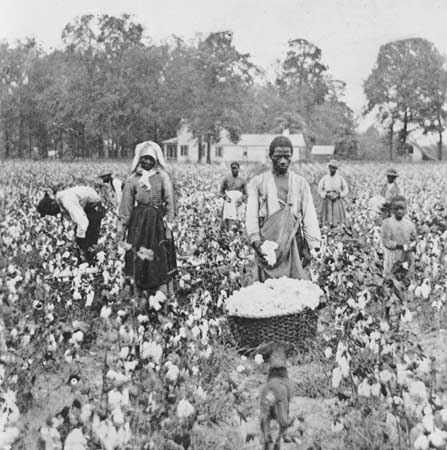
1)     Sharecroppers in the Mississippi Delta – the Delta area covered much of northwestern Mississippi, between the Mississippi and Yazoo Rivers, and was the area in the state most devoted to the cultivation of cotton, and therefore had a high concentration of descendents of former slaves in the area.

2)     Musical traditions – work songs, which helped regulate the pace of labor (as well as help the time pass more quickly); sacred music; both forms used “call and response.”

3)     Itinerant musicians – the Delta area, before the advent of the juke box and radio, had a tradition of musicians who traveled from plantation to plantation to play music for Saturday night fish fries, and at “juke joints.” For many men (and a few women), this was the only chance for them to avoid a life of back-breaking, ill-paying labor

(a)  Charley Patton

(b)  Robert Johnson

(c)   Huddie “Leadbelly” Ledbetter

(d)  B.B. King

(e)  Muddy Waters

(f)    Howlin’ Wolf

4)     Movement off farms into cities – so-called “chain” migration—migrants often first moved into cities in the South, and then into cities in the North from there

(a)  Pull of wartime employment – as jobs opened up to African Americans in factories and docks in the North, many left farms to fill these jobs in the North.

(b)  Push of mechanization – after the war, cotton cultivation became increasingly mechanized, which meant that it was cheaper for large landowners (plantation owners) to buy tractors, cultivators, etc., and dismiss their sharecroppers—which in turn meant that these sharecroppers were forced to move off the land that they had cultivated; many chose to move into cities.

B)     Poor white southerners – segregation, that we think of as personifying life in the South (and in the North, for that matter), is really an urban phenomenon than something that takes place in a rural environment; poor southern whites often found themselves in similar situations as their African American neighbors.

1)     Tenant farmers – depressed farm prices had earlier forced many tenant farmers off farms and into cities, north and south.

2)     Musical traditions

(a)  Secular – “hillbilly” music; without radio, many people had to entertain themselves, and their neighbors.  White musicians in the south had a long tradition of learning music from their African American neighbors

(b)  Sacred – prevalence of Pentecostal religions in the South (both white and black) meant that adherents to these various sects were familiar with emotionally charged music, from their church services.

3)     Movement off farms and into cities – for many of the same reasons that African Americans moved into cities; same kind of chain migration as was the case with African Americans.

(a)  Wartime employment

(b)  Mechanization of farming in the south

II)               Radio – radio became the vehicle for popularizing “race” music among a wider audience

A)    Clear Channel Stations – (not those of the company of today) in the late 1940s and 1950s, there were a number of 50,000-watt (the largest the government would allow) stations that could be heard (best at night) over much of the country—the so-called “clear channel” stations.

1)     WDIA – white-owned radio station in Memphis began playing “race” music at night for the African American audience in the city, and as a result a number of white audience members were exposed to the music, as well.
B) Chuck Berry--St. Louis native, grew up in black middle class family. This did not prevent him from running into problems with the law, however; between 1944 and 1947, he served time in prison on armed robbery charge. Upon his discharge from prison, he married and worked a variety of jobs, including in two automobile factories, before becoming a hairdresser. To pick up some extra cash, Berry began sitting in with the Johnnie Johnson Trio at the Cosmo Club in St. Louis. During Johnson's breaks, Berry would entertain the crowd with his rendition of "hillbilly" songs, popular with whites--and began attracting whites to the club.


1) Chess Records--in 1955, Berry followed Johnson to Chicago, where he met Muddy Waters. Waters introduced Berry to Leonard Chess, one of the brothers who ran the record label where both Waters and Johnson now recorded. Berry played a variety of his songs for Chess, but Chess was particularly drawn to Berry's rendition of a traditional country song called "Ida Red." After altering the lyrics, the company released the now-titled "Maybelline" and gave New York disk jockey Alan Freed partial writing credit for the song to encourage him to play it often. As the tired phrase says, the rest is history.


C)     Sam Phillips and Sun Records

1)     Sam Phillips – white engineer opened Memphis Recording Service, and began to seek out local African American talent to record.  Phillips quickly became frustrated at the limited sales that the race music was able to attain, and he begins to seek out a white singer to perform music in this style.

(a)  How does Phillips know that such a person exists? – because he himself enjoys such music, and is confident that other white southerners feel the same way, and are performing such music out there somewhere.

III)            Elvis

A)    Childhood – Elvis was an only child (his twin brother, in fact, died soon after he was born) brought up by a doting, domineering mother and a largely absent father.

1)     Pentecostal church upbringing – Elvis attended sanctified churches with his parents, where he would have been exposed to the emotionally charged services that these churches are known for.

2)     Working-class upbringing – Elvis’ childhood was rather economically distressed, his father worked a series of rather low paying jobs.  Elvis grew up in Tupelo, MS, and although the public schools that he attended were segregated, and the public facilities (theaters, restrooms, etc.) were segregated by race, the town itself was only segregated by income.

3)     Father imprisoned – when Elvis was growing up, his father was imprisoned for several years after an attempted robbery, which did not affect the social standing of the family in the city, but only confirmed their outsider status there.

B)     Move to Memphis – some time after his father was released from prison, the Presley family moved from Tupelo to Memphis, where Elvis eventually graduated from high school, and held down several rather low-paying jobs driving trucks.


1) Memphis was a was becoming one of the most industrialized cities in the South (outside of Birmingham, Alabama and Atlanta, Georgia), and a stopping point for white and black migrants from the Mississippi Delta region, western Tennessee, eastern Arkansas, and southeastern Missouri. It was a major port on the Mississippi, as well as the largest shipping point on the Illinois Central Railway between Chicago and New Orleans.

C)    Recording of song for mother – to surprise his mother on her birthday, Presley recorded a song at the Memphis Recording Service—which led eventually to his being courted by owner Sam Phillips to record some music with two musicians that he had worked with

D)    The Sun Records years – (both of them) Elvis cut only six singles with Sun, but they changed popular music forever.


1)     The marriage of white and black sensibilities – Elvis was able to cross boundaries that were thought to be impossible to cross; it was probably no accident that his first successful recording included a countrified version of a rhythm and blues hit, and a rhythm and blues treatment of a country hit.


2)     Elvis’ demeanor

(a)  Loved “loud” clothing (bought at Lansky Brothers, which catered to a largely African American clientele); and he favored pink particularly (which at that time was not a color that most men would have been caught out in public in).

(b)  Use of make-up – like Little Richard (although perhaps for different reasons), Elvis used make-up (eye-liner and eye-shadow) not only when he was performing, but in everyday life.

(i)                Explanation of Elvis androgynous appeal – males tended to like Presley’s music, if not his performance style (which females reacted to vociferously)

3)     Inspiration of others – many other white performers followed Presley to Sun Records, and eventually to other record companies, as well

IV)             Race, Class, and Rock ‘n Roll

Thursday, April 1, 2010

Weekly Assignment #11

Fron Going to the Source, Chapter 11, question 3 (Due April 8)

The Cold War at Home

I. 1945-46 Strike Wave--effected most industries, and was a result of worker's pent-up demands for wage increases to catch up with the wartime price spiral, and because industry did not want to grant wage increases until price restrictions were removed

A. Steel Workers

1. Little Steel--the steel companies besides US Steel were hoping to break the union (the companies of Little Steel had resisted unionization to the bitter end

B. Electrical Workers

C. Rubber Workers

D. Auto Workers

1. "Open the books"--Reuther demanded at the bargaining table that General Motors present proof that it could not grant the demanded wage increase because of financial considerations--and that proof would be GM "opening the book," or financial ledgers, of the company.

E. General strikes

1. Pittsburgh, Pennsylvania

2. Rochester, New York

3. Lancaster, Pennsylvania

4. Oakland, California

II. 1946 Election--A Right Turn?

A. Office of Price Administration (OPA)--fearing that inflation would cause a recession that would stunt peacetime recovery, the wartime agency--now headed up by former Toledo mayor Michael DiSalle--was kept in the hope that it could control inflation; the agency was unsuccessful in this attempt, however.

B. Post-war recession--with wartime contracts ended, industry cut back production in the anticipation that there would be a recession--despite the fact that these contracts guaranteed these companies a profit for the next year.

C. Democratic control--as the party that controlled both houses of Congress, as well as the White House, the Democratic Party received the blame for things that went wrong from the end of the war to the 1946 election.

1. "Coziness" with labor--labor was already seen as exceedingly close with the Democratic Party, and therefore the party was blamed in the mainstream press and by the business class for not "controlling" labor in 1946.

2. 1946 Election--Republicans win majorities in both houses of Congress for the first time since 1930. It is generally argued by political scientists and historians that general weariness with "change" as well a desire to "give the other guys a chance," along with Truman's unpopularity, also contributed. These factors did effect turnout of Democratic voters, and allowed Republicans to gain control of the Senate (they increased their control in the House of Representatives, which they had won in the 1944 election--despite FDR prevailing in the presidential election).

D. 1947 Legislation

1. Taft-Hartley Act--amended the National Labor Relations Act to disallow sympathy strikes and boycotts. Gave states the right to outlaw the union shop, the so-called "right to work" (without belonging to a union).

E. 1948 Election

1. Democratic Party Split

a. Progressive Party

b. State Rights ("Dixiecrat") Party

2. Civil Rights plank

a. Desegregating the Armed Forces

3. Lackluster Republican campaign--combination of what Truman labeled the "do-nothing" Congress, and a lackluster campaign by Thomas Dewey, who was running not to lose rather than to win.

III. The Post-war Red Scare

A. Communist spies

1. Rosenberg trial--the conviction of Julius and Ethel Rosenberg

B. Rise of Joe McCarthy

1. Early political career

2. Wheeling (WV) speech

3. Army-McCarthy hearings