Tuesday, January 25, 2011
Immigration in the United States
I) Old immigration – historians in the past have used the designations “old immigration” and “new immigration” to distinguish between those people who came from northern and western Europe (the old immigrants) and southern and eastern Europe (the new immigrants). I purpose to use these old terms in new ways: to designate the old immigration as those immigrants who came before 1870; and those who came after. Technological innovations in travel, both sea and land, make this distinction viable because then we can highlight the real difference between immigrants, those who came to establish new homes, and those who came to earn enough money to improve their old homes.
A) Irish as old immigrants – the Irish were a highly visible old immigration group, because they tended to be mainly Roman Catholic (and perceived as a threat to the freedoms of a profoundly Protestant—if avowedly secular—country), and because they immigrated in huge numbers.
1) Changes in landholding – although we traditionally think of the number one cause for Irish immigration as the Great Famine, Black ’47, Irish immigration in large numbers actually began years before the Famine. In fact, changes in landholding patterns throughout Europe were the primary cause for the immigration of peasants to the western hemisphere.
(a) Termination of serfdom – serfdom (a classification of station, of social order, similar to slavery) existed throughout Europe at the beginning of the modern era (for our purposes, 1600). Serfs were peasants who were tied to the land they worked for their lord (the owner of a manor). Serfs usually owed their lord a portion of the crop that they raised, and usually had to perform a fixed amount of labor for the lord on the manor, as well. Serfs were not completely propertyless, however; they usually owned a crude house, the adjoining land, and a small portion of plot that was worked in common. Serfdom was ended in England and the British Isles (including at this stage Ireland), in the 1600s; there were few serfs in France by the French Revolution in 1789. Serfdom did not completely disappear in Europe at this earlier time period, however; it existed in Prussian well into the 1800s, and Russian did not abolish serfdom until 1861. The termination of serfdom meant, however, that a large portion of the population in Europe was now free to roam around, and many peasants did so, seeking employment to supplement their subsistence from the land.
(b) Termination of the commons – a portion of a manor was common land, or the commons—land which all members of the community had rights to use. Use of the commons continued to exists in western Europe after serfdom ended, which allowed the practice of subdividing land among all of the male heirs in a family, since they could use the commons to hunt, gather peat for fires (there were very few trees left in Europe, particularly in England and Ireland, by this time, and most of the trees that were left the monarch claimed for military use), and graze livestock. With the growing importance of raising commercial livestock, the former lords of the manor (who remained the largest landholders), began seizing the commons; to keep the livestock of villagers from using the former commons area, large hedges were grown around the perimeter to keep other livestock out. These hedges can still be seen in England and Ireland, even though free range (similar to the commons idea) has returned in Ireland.
(c) Rise of primogeniture landholding – the amount of land to be divided became smaller, because of the practice of division among all male family members, and because much of the land was held be gentry class. This meant that individual landholdings got smaller, and had to be farmed more intensively—which became disastrous when the famine hit Europe.
2) Rise of manufacturing – as landholding was changing in Europe (particularly in England and Ireland), manufacturing and industrialization were beginning to take off in England and the United States.
(a) Manufacturing in England – the manufacturing of textiles in England—particularly in Liverpool and Manchester—as well as the manufacturing of iron and steel in Birmingham attracted workers from around the British Isles, who searched for ways to increase their incomes. Many agricultural workers and displaced farmers began to migrate to these developing industrial areas during lulls in the agricultural year to supplement their incomes; some stayed on permanently.
(b) Manufacturing in the United States – opportunities in manufacturing in the United States—as well as jobs constructing a transportation infrastructure (canals and railroads) attracted a great number of these displaced peasants and agricultural workers, particularly during the 1820s and 1830s.
(i) Because of the increased cost of migrating to the United States (as opposed, say, to Liverpool or Birmingham) meant that only immigrants with some means came to the United States—that is, they had some prior savings, or some skill that they hoped would transfer (many Irish immigrants had been cottagers in Ireland—that is, they worked as independent textile manufacturers. Most had to leave their looms behind, and upon arrival in the States found that most textile manufacturing was done in factories, anyway)
3) Black ’47 – the potato blight affected much of Europe, and was part of the cause of the increased migration from Germany, as well as Ireland.
(a) Reliance on the potato – because of the small amount of arable land available to most European (and especially Irish) farmers, they sought a crop that provided the greatest amount of calories per acre, which happened to be potatoes.
(b) The potato blight – the first year of the blight was 1845, devastating much of the crop that year; 1846 the blight was less worse, and seemed less threatening; 1847 it devastated most of the potato crop, as well as much of the population.
(c) Blight and immigration – the blight increased the urgency of immigration from Ireland, which was already occurring.
(i) Immigration to England – the poorest immigrants immigrated across the Irish Sea to England; because of their dire condition, many did not complete even this short journey.
(ii) Immigration to the United States – many Irish immigrants to the United States, while they arrived in the country destitute and often in ill health, were those who began the journey with the best chance of survival. Even so, about 10% died on the journey, a rate roughly comparable to slave ships.
B) Transportation technology
1) Sailing ships – the trip across the Atlantic took anywhere from three to six weeks, depending upon the weather and the port of departure. This length of time, and the conditions of travel in steerage, where most immigrants spent the trip, contributed to the mortality rate. The change of technology to screw-driven, steam-powered ships in the 1870s and 1880s had the double effect of decreasing the length of time the journey took, as well as dropping the price of the trip
C) The “Immigration Problem”—the assimilation of immigrant groups has caused concern among political elites in the United States since before there was a United States; Benjamin Franklin was suspicious of the people he called the “Dutch” in the area around Philadelphia (largely because of their loyalty to the Penn family, with whom Franklin was in near constant dispute with) is one of the early examples.
1) Local politics—new immigrant groups were viewed by political and economic elites as compliant tools of corrupt, big-city political “machines.” Immigrants could only make demands on these machines when they had votes to trade for services, however.
2) Hull House—established by Jane Addams and Ellen Starr in Chicago in 1889, in one of the poorest immigrant neighborhoods in the nation. Before Hull House residents provided political organization (and lots of publicity), residents in the neighborhood received few city services.
II) New Immigration
A) Transportation technology -- the change in technology allowed peasants and workers to move back and forth between Europe and the United States, which both the eastern and southern European immigrant, as well as those from northern and western Europe, took advantage of.
1) Screw-propeller steamships – the invention of the screw-propeller steamship cut down the length of travel from three to six weeks to one to three weeks, again dependent upon the port of departure (and arrival). This increase in speed allowed ships to make more trips; this led to the development of ships devoted to carrying passengers (to this point, the main income for a ship was cargo, rather than passengers), which allowed better accommodations for steerage passengers as well as cutting the cost of the trip to less than $10 one way.
2) Sojourners/Remigrants – there had always been sojourners (people who intended only to be temporary residents of a country—also referred to as remigrants), but the price drop for the trip, and the growing assurance that one would survive the trip in relative comfort, made the trip to the United States increasingly attractive to large numbers of working-class Europeans.
(a) Signaled a change in the nature of US immigration, because many of the people entering the country after 1870 did not intend to become permanent residents of the country, let alone become citizens.
(i) Increased resentment and angry reaction on the part of native Americans, which contributed to the renewed nativist sentiment in the country (leading eventually to legislation being passed in 1924 to restrict the numbers of immigrants allowed in the country each year.
(b) Attracted by high wages in US – the wages that a sojourner could obtain in US industry outpaced by far the wage they could command for agricultural and industrial work in Europe, and resulted in huge numbers of these workers, largely male, making their way to the United States.
(i) The labor movement, which should have worked to organize these new immigrants to keep them from lowering the wage rates for all workers, instead attempted to restrict the number of immigrants allowed into the country each year
(ii) Chinese Exclusion Act (1882) – at the instigation of labor in the West, particularly in California, but the entire labor movement eventually fell in line on this matter, including the Knights of Labor, which had practiced bi-racial unionism.
(iii) Because of immigrant interest in earning as much money as quickly as possible, most were uninterested in striking, or joining unions which often demanded union dues.
(i) Few immigrants in the 1870-1920 time period came with skills, so were unattractive to unions within the AFL (the dominate organization for labor during this time period—although the founder of the AFL, Samuel Gompers, was himself a Jewish immigrant from England.
B) Immigrant institutions
1) Church – many immigrants came from countries were Roman Catholicism was the dominant religion; the Church in Europe was dominated generally by the ethnic group that dominated within the country; in the United States, the RC Church was dominated by Irish and German clergy.
(a) Polish National Catholic Church – the response of a small part of the Polish population in the US was to establish their own church, which retained the practices of the RC Church except for recognition of the ecclesiastical authority.
(b) Conversion to Protestant sects – some immigrants converted to a Protestant sect, which caused consternation when they returned home to establish new churches.
2) Fraternal organizations – because of the high-risk jobs that immigrants tended to take (in return for what they thought were high wages), insurance became increasingly important (for burial, etc.)
3) Saloons – one of the avenues for upward mobility for immigrants was to open a saloon. This became a social gathering place for members of ethnic groups, a place where they could read newspapers, carry on conversations in their native tongues, receive and send mail, and bank. The saloon also served as a center from which to gather information about job openings, because the saloon owner was usually well connected.
C) 20th Century changes in immigration
1) Democratization of Europe – with the defeat of the Axis Powers in World War I, most monarchies on the Continent were done away with, and ethnic groups found themselves able to create their own governments; this not only tended to keep peasants home, but also drew back (initially) migrants already in the United States.
(a) Poland – had been a part of three different countries since the late 1700s, and was able to establish its own government (until 1939, that is)
(b) Czechoslovakia
(c) Yugoslavia
(d) Austria
(e) Hungary
2) Immigration restrictions – by 1924, when the euphoria for the new governments was wearing off, restrictions on immigration in the US became law, and took effect by 1927.
3) Economic depression – by the beginning of the 1930s, the worldwide economic depression ended employment opportunities in the United States.
III) Conclusion
Sunday, January 23, 2011
The Labor Problem in the 19th Century
I. 1877—The Great Upheaval
A. Railroads—the “engine” of economic growth by the mid-19th century, but also caused a great deal of disruption in the neighborhoods that the trains passed through, particularly in this time before the grade the railroad tracks ran on was elevated.
1. Injuries to children—in these neighborhoods, children were regularly injured or killed because they were hit by a train.
2. Injuries to railroad workers—working on a railroad was very dangerous work, and workers were regularly maimed or killed, particularly working in the rail yard, coupling and uncoupling rail cars.
3. Watered stock—in this period of rapid expansion, railroad companies often sold more stock than they had assets or profits to cover; or the board of directors might issue themselves more stock to stave off (or profit from) a merger with another company. This was known as “watering” the stock, and was a huge problem for investors not on the board of directors.
4. Depression of 1873—caused in large part by the bankruptcy of Jay Cooke & Company, a Philadelphia investment bank financing the initial construction of the Northern Pacific Railroad. This depression lasted until 1879.
5. Cost-cutting—then, like today, companies were more concerned with the bottom line than with the well-being of their workers, and immediately began cutting wages and jobs—through thousands of people out of work
B. The Great Upheaval—the continuation of the depression meant that businesses continued to cut wages and workers, particularly in the railroad industry.
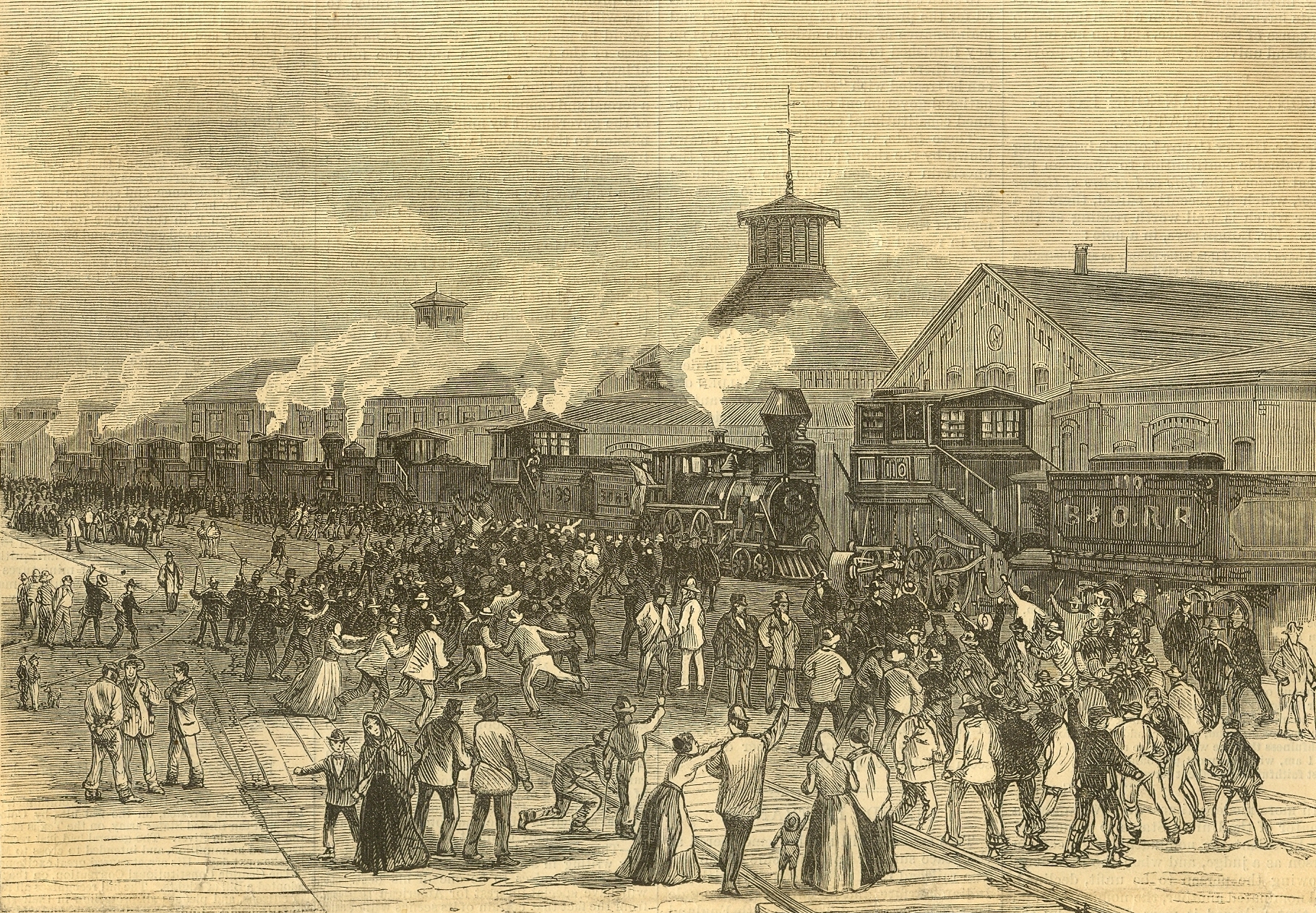
1. Martinsburg, WVa—a critical junction of the Baltimore and Ohio Railroad. Workers there decided to strike to attempt to force the company to rescind yet another wage cut in the summer of 1877. Workers prevented trains from passing through Martinsburg, despite the effort of the governor of West Virginia to mobilize the state militia. Workers also used their knowledge of and access to communication technology to workers around the rest of the country.
2. Pittsburgh—inspired by news of events in Martinsburg, and facing similar wage cuts, railroad workers in Pittsburgh went on strike against the Pennsylvania Railroad. When the militia was called up, they chose to bring troops from Philadelphia, were the Pennsylvania Railroad was headquartered. The arrival of this force of “outsiders” sparked a violent confrontation that eventually saw dozens killed, hundreds seriously injured, and much of the huge rail yard in Pittsburgh destroyed.
3. Toledo—In Toledo, agitation for an 8 hour workday for a minimum $1.50 a day wage led a number of workers, inspired by the job action of local railroad workers, to march from manufacturer to manufacturer to ask that the owner concede this demand—and to call for the workers to join the strike if the owner declined. That evening, a cache of arms stored since the abortive Fenian Uprising ten years before helped the local militia of business owners put down the rebellion.
4. St. Louis—inspired and aided by railroad workers, the workers of St. Louis actually engaged in a brief general strike, and workers for a time took over the governance of the city.
5. San Francisco—the Workingman’s Party in San Francisco was largely an instrument of anti-Chinese agitation, and the uprising there quickly degenerated into an anti-Chinese pogrom.
6. Chicago—inspired by the fiery rhetoric of Confederate veteran Albert Parsons and a number of German-American followers of direct-action anarchist Johann Most, workers in Chicago closed down railroad lines, and much else in the city, as well. Although there was not a general strike here as there was in St. Louis, workers sympathetic to the radicals in the Workingman’s Party (in Chicago, this meant the anarchist contingent) regularly struggled against employers in the city—as well as the police force that workers saw working for business interests in the city.
II. 1886 and Haymarket
A. Economic climate—by early 1878, the US economy began to recover from the depression, and there was a brief period of economic growth—and labor quiescence—before the next depression hit in 1883-1884.
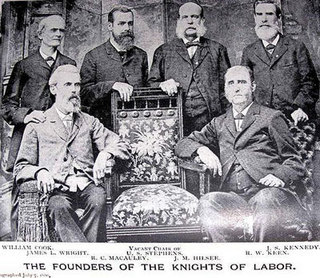
B. Knights of Labor (K of L)—founded by nine tailors in Philadelphia in 1869, in the organization’s early years of existence it functioned more as a fraternal organization than a labor union; it eventually emerged as the first general labor union in the United States, however, and attempted to organized all workers in the country without regard to gender or race (with one important exception).
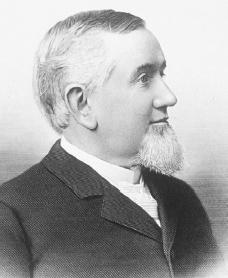
1. Emergence—the K of L emerged in the late 1870s under the leadership of Grand Master Workman Terrence O. Powderly, a former railroad worker. The K of L organized workers into “local assemblies,” which could be based both organized by community location, or by craft.
2. Powderly’s claim—Powderly’s claim to abhor strikes was probably genuine, by the K of L was most successful in organizing workers by leading them into successful strikes.
3. 1885 Southwestern Railway strike—the most successful of the Knight’s strikes, which led to unorganized workers seeking out K of L organizers to join the union.
C. Federation of Organized Trade and Labor Unions (FOTLU) – a rival group to the K of L, consisting of skilled trades workers organized by craft. To set itself apart from the K of L, FOTLU began agitating for a standard 8-hour day in all trades and industries by May 1, 1886.
1. Strike at McCormick Reaper—in late April, workers went on strike for higher wages and a standard 8-hour day at the large factory in Chicago.
2. May Day—May 1, International Workers’ Day, FOTLU called for a one day general strike. A parade of several thousand marched up Michigan Avenue; after the festivities downtown, some workers ended up at the McCormick works to show support for the strikers there. When a sizable contingent of strike supporters showed up again the next day, the police were called out to maintain order; in a confrontation, the police fired on the crowd, killing several.
3. August Spies—in reaction, the editor of the leading German language newspaper called for workers to attend a protest rally at Haymarket Square the next evening—and he advised them to come armed.
4. Haymarket Riot—in dismal weather, a small crowd gathered on the evening of May 3, 1886 to listen to a serious of speeches. As the evening was winding down, a contingent of Chicago police arrived on the scene to ensure the crowd left quickly and peacefully—when someone from the fringe of the crowd through a bomb that landed in the midst of the police. The combination of the bomb blast and the ensuing gun battle caused seven police officers to be killed, and a number wounded. Reliable numbers for the crowd have never been compiled.
The strike was conceded on November 20, 1892, and immediately the Carnegie Company lowered wages and increased the hours of its workers. The strike ended the influence of the AA.
III. 1894 Pullman Strike.
A. George Pullman – made his fortune hauling Chicago out of the muck; after the Great Fire of 1871, efforts were made to raise the remaining buildings as much of the swamp that the city was built on was filled. Pullman used this money to establish a company to build sleeping cars used on long trips by railroad companies.
B. Town of Pullman – as the company grew, Pullman became concerned about the effect the radicals in Chicago were having upon his workers, so several miles south of the city he built a town (housing, stores, public buildings, a hotel he named after his daughter Florence, even churches) which he rented to workers, but which he retained title.
1) “Model” town – Pullman the town was a great example of welfare capitalism—that is, subsidizing certain amenities for workers so they remain satisfied on the job.
2) Depression of 1893 – the economic depression of 1893 cut deeply into the profits of the Pullman Company, and Pullman responded by cutting wages and laying off workers, as any good capitalist would do.
(a) Pullman rents – Pullman refused to cut rents in the same manner, however, since that division of the business had to show a profit as well.
(b) Pullman workers respond by going on strike in the spring of 1894.
C. Eugene V. Debs – a former officer of the Brotherhood of Railway Firemen, Debs in early 1894 became president of an early industrial union for railway workers, the American Railway Union.
1) Railway “Brotherhoods” – each specialty in the railroad industry had its own union, The Brotherhood of Railway Engineers, Brakemen, Conductors, Firemen; problems arose when railway companies settled with one of the brotherhoods, and they crossed the picket line while others were still on strike. The ARU is meant to be a solution to this problem.
2) 1894 ARU convention – was held in Chicago; a delegation of workers from Pullman, who plead for the assistance of the ARU. Despite Debs opposition, convention delegates vote to assist Pullman workers, and vote to boycott all trains with Pullman cars. Despite the fact that the ARU represents a relatively small number of workers, traffic all over the country is interrupted.
3) Government response – because there was little violence accompanying the strike the federal government was hamstrung; with a sympathetic John Peter Altgeld as Illinois governor, there was little chance that federal aid would be requested.
(a) Richard Olney – the AG for the federal government was a railroad attorney, and it was he who suggested attaching Pullman cars to mail trains (interfering with the mail is, of course, a federal offense).
(b) Troops from Fort Sheridan (and the Dakotas) are called in “to keep the peace,” which allowed the strike to be broken.
(c) Debs and other union leaders were arrested and held incommunicado, which also helped break the strike; Debs spent a year in jail in Woodstock, Illinois, which he spent reading socialist tracts; he becomes the Socialist Party candidate for president in 1900, 1904, 1908, and 1912, when he polled the largest number of votes to that time in history for a third party candidate.
A. Railroads—the “engine” of economic growth by the mid-19th century, but also caused a great deal of disruption in the neighborhoods that the trains passed through, particularly in this time before the grade the railroad tracks ran on was elevated.
1. Injuries to children—in these neighborhoods, children were regularly injured or killed because they were hit by a train.
2. Injuries to railroad workers—working on a railroad was very dangerous work, and workers were regularly maimed or killed, particularly working in the rail yard, coupling and uncoupling rail cars.
3. Watered stock—in this period of rapid expansion, railroad companies often sold more stock than they had assets or profits to cover; or the board of directors might issue themselves more stock to stave off (or profit from) a merger with another company. This was known as “watering” the stock, and was a huge problem for investors not on the board of directors.
4. Depression of 1873—caused in large part by the bankruptcy of Jay Cooke & Company, a Philadelphia investment bank financing the initial construction of the Northern Pacific Railroad. This depression lasted until 1879.
5. Cost-cutting—then, like today, companies were more concerned with the bottom line than with the well-being of their workers, and immediately began cutting wages and jobs—through thousands of people out of work
B. The Great Upheaval—the continuation of the depression meant that businesses continued to cut wages and workers, particularly in the railroad industry.
1. Martinsburg, WVa—a critical junction of the Baltimore and Ohio Railroad. Workers there decided to strike to attempt to force the company to rescind yet another wage cut in the summer of 1877. Workers prevented trains from passing through Martinsburg, despite the effort of the governor of West Virginia to mobilize the state militia. Workers also used their knowledge of and access to communication technology to workers around the rest of the country.
2. Pittsburgh—inspired by news of events in Martinsburg, and facing similar wage cuts, railroad workers in Pittsburgh went on strike against the Pennsylvania Railroad. When the militia was called up, they chose to bring troops from Philadelphia, were the Pennsylvania Railroad was headquartered. The arrival of this force of “outsiders” sparked a violent confrontation that eventually saw dozens killed, hundreds seriously injured, and much of the huge rail yard in Pittsburgh destroyed.
3. Toledo—In Toledo, agitation for an 8 hour workday for a minimum $1.50 a day wage led a number of workers, inspired by the job action of local railroad workers, to march from manufacturer to manufacturer to ask that the owner concede this demand—and to call for the workers to join the strike if the owner declined. That evening, a cache of arms stored since the abortive Fenian Uprising ten years before helped the local militia of business owners put down the rebellion.
4. St. Louis—inspired and aided by railroad workers, the workers of St. Louis actually engaged in a brief general strike, and workers for a time took over the governance of the city.
5. San Francisco—the Workingman’s Party in San Francisco was largely an instrument of anti-Chinese agitation, and the uprising there quickly degenerated into an anti-Chinese pogrom.
6. Chicago—inspired by the fiery rhetoric of Confederate veteran Albert Parsons and a number of German-American followers of direct-action anarchist Johann Most, workers in Chicago closed down railroad lines, and much else in the city, as well. Although there was not a general strike here as there was in St. Louis, workers sympathetic to the radicals in the Workingman’s Party (in Chicago, this meant the anarchist contingent) regularly struggled against employers in the city—as well as the police force that workers saw working for business interests in the city.
II. 1886 and Haymarket
A. Economic climate—by early 1878, the US economy began to recover from the depression, and there was a brief period of economic growth—and labor quiescence—before the next depression hit in 1883-1884.
B. Knights of Labor (K of L)—founded by nine tailors in Philadelphia in 1869, in the organization’s early years of existence it functioned more as a fraternal organization than a labor union; it eventually emerged as the first general labor union in the United States, however, and attempted to organized all workers in the country without regard to gender or race (with one important exception).
1. Emergence—the K of L emerged in the late 1870s under the leadership of Grand Master Workman Terrence O. Powderly, a former railroad worker. The K of L organized workers into “local assemblies,” which could be based both organized by community location, or by craft.
2. Powderly’s claim—Powderly’s claim to abhor strikes was probably genuine, by the K of L was most successful in organizing workers by leading them into successful strikes.
3. 1885 Southwestern Railway strike—the most successful of the Knight’s strikes, which led to unorganized workers seeking out K of L organizers to join the union.
C. Federation of Organized Trade and Labor Unions (FOTLU) – a rival group to the K of L, consisting of skilled trades workers organized by craft. To set itself apart from the K of L, FOTLU began agitating for a standard 8-hour day in all trades and industries by May 1, 1886.
1. Strike at McCormick Reaper—in late April, workers went on strike for higher wages and a standard 8-hour day at the large factory in Chicago.
2. May Day—May 1, International Workers’ Day, FOTLU called for a one day general strike. A parade of several thousand marched up Michigan Avenue; after the festivities downtown, some workers ended up at the McCormick works to show support for the strikers there. When a sizable contingent of strike supporters showed up again the next day, the police were called out to maintain order; in a confrontation, the police fired on the crowd, killing several.
3. August Spies—in reaction, the editor of the leading German language newspaper called for workers to attend a protest rally at Haymarket Square the next evening—and he advised them to come armed.
4. Haymarket Riot—in dismal weather, a small crowd gathered on the evening of May 3, 1886 to listen to a serious of speeches. As the evening was winding down, a contingent of Chicago police arrived on the scene to ensure the crowd left quickly and peacefully—when someone from the fringe of the crowd through a bomb that landed in the midst of the police. The combination of the bomb blast and the ensuing gun battle caused seven police officers to be killed, and a number wounded. Reliable numbers for the crowd have never been compiled.
I) Homestead
A) Iron and Steel Industry – by the late 1880s and early 1890s, the iron and steel industry had overtaken railroads as the premier industry in the United States. Millions of tons of steel and steel products – rails, armor for railroad cars and locomotives, machines, machine tools (machines that made other machines), as well as for structural support for new high-rise buildings in the larger cities (which we know as skyscrapers).
1) Andrew Carnegie – former railroad executive secretary, Carnegie took the advice of his boss, Pennsylvania Railroad president Thomas A. Scott, and took the opportunity that presented itself to invest in the iron industry.
(a) Carnegie was already a wealth investor when he became involved in the iron and steel industry. Carnegie applied many of the techniques in business management that he learned in the railroad industry (particularly cost-accounting and business coordination, which helped keep his costs well below that of his competitors); he also retained control of the stock of his company, which allowed him to reinvest the profits back into the company, and therefore buy the latest equipment, and hire the best and brightest technical people.
(b) Vertical integration – Carnegie owned not only the steel mills that produced steel, but he also bought the mines that produced the iron ore and coal need for production, the coking plants that produced the needed coke (processed coal), and the railroad cars and shipping fleet needed to bring in the raw materials and distribute the finished product.
(c) Philanthropy – Carnegie used the wealth he helped create to greatly strengthen the public library system in the United States; he also endowed universities, built Carnegie Hall in NYC—and he advocated that other men of wealth follow his lead.
2) The drive to economize – the “secret” of Carnegie’s business success was that his management team was as driven to cut the costs of business as he was (in part because their reward system depended upon it—managers received a substantial portion of the savings they created for the company due to increased productivity; this same opportunity was denied workers who also contributed to this effort by working harder and longer).
(a) Productivity – defined as manufacturing, or making, more of an object at the same or less cost as compared with an earlier time period. Productivity is the basis for capitalist profit, which in theory allows them to “share” their decreased cost with the consumer, so “all” benefit.
(i) Business competition – Carnegie’s compatriots drive to decrease costs tended to drive out of the business those manufacturers who could not keep pace; because of the capital investment to get started in the business, however, a buyer (quite often Carnegie) could be found for the property. With more and more manufacturing capacity being held by fewer and fewer companies, the tendency of capitalist enterprises towards monopoly becomes more pronounced.
(ii) Business cycle – also known as the “boom and bust” cycle; businesses run like crazy to produce goods to sell, the market for a particular good becomes saturated, causing a glut, and then follows a time of little production, until demand picks up again.
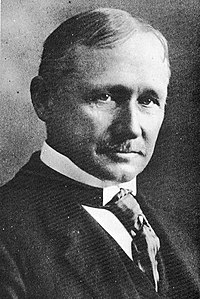
(iii) Taylorism – Frederick Winslow Taylor was convinced that he could find the “one best way” to accomplish any job. Taylor himself came from an upper middle class background, but he became a machinist. “Soldiering” and what he perceived as inefficiencies of his fellow workers led him to develop time and motion studies, and to outline management practices devoted to prodding workers to put in 60-minute hours at work.
(b) Technology – this drive for greater levels of productivity also led American industrialists to use more machines than capitalists in other countries
(i) Lack of skilled workers? – Some historians and economists have argued in the past that because the United States allegedly lacked skilled workers, that industrialists relied more on the development of machines and machine tools to compensate. Today this reliance seems to have come about for other reasons
(ii) Labor costs – the increased level of machine use helped capitalists keep down the cost of labor, because the capitalist was able to replace skilled workers (who would have cost him more) with unskilled workers to tend the machines (who cost much less, and were easily replaced should they become recalcitrant.
(iii) This also undermined the position of the union worker, obviously, especially the skilled worker, who made up most of the ranks of the unions belonging to the AFL. Union members within the AFL umbrella fight battles to retain the benefits of the knowledge they had gained from working a particular job.
(i) “Featherbedding” – some AFL unions were successful for a time in keeping workers whose jobs had become technologically obsolete.
(c) Profits – by the early 1890s, the Carnegie Steel Company was making profits of more than $40,000,000 a year
3) Amalgamated Association of Iron, Steel, and Tin Workers (AA) – in 1892, the AA was the largest and strongest union within the AFL, with approximately 24,000 members. The members of the union included only the skilled workers in iron, steel, and tin foundries; not considered for membership was a much larger contingent of unskilled workers, many of whom were new immigrants from Eastern Europe.
B) Homestead and the strike
1) City of Homestead – named after the nearby iron mill, Homestead was located several miles from Pittsburgh, up the Monongahela River. The town was completely dominated by the Carnegie mill—but the town leaders and townspeople identified with the workers more than Carnegie or his managers.
2) Homestead works – Ford C. Frick was hired by Carnegie to rid Homestead of the AA. After putting Frick in charge, Carnegie left for an extended stay in his castle in Scotland, but communicated in secret with Frick.
(a) “Negotiations” – Frick made demands upon the AA which he knew would be unacceptable, and then locked out union members when negotiations broke down in late June. Before the lockout, Frick had an eight-foot steel fence erected around the entire works
(b) Pinkertons – on July 6, a bargeful of 300 Pinkerton agents was discovered motoring up the Monongahela by union lookouts, who quickly notified union members in Homestead. Union members quickly occupied the Homestead works, and a fierce gun battle raged along the riverfront for most of the day, when finally the Pinkerton agents were forced to surrender; agents were forced to run a gauntlet in town, and many were severely injured as a result
(c) Won the battle, lost the war – the Allegheny sheriff was unable to recruit locals to “establish order,” and appealed to the governor for mobilization of the militia, and eight thousand troops arrived shortly to protect strikebreakers
(i) The Carnegie Company had the strike and union leaders arrested, some of who were charged with murder; after trials, all were found not guilty, but the defense efforts depleted the union treasury
III. 1894 Pullman Strike.
A. George Pullman – made his fortune hauling Chicago out of the muck; after the Great Fire of 1871, efforts were made to raise the remaining buildings as much of the swamp that the city was built on was filled. Pullman used this money to establish a company to build sleeping cars used on long trips by railroad companies.
B. Town of Pullman – as the company grew, Pullman became concerned about the effect the radicals in Chicago were having upon his workers, so several miles south of the city he built a town (housing, stores, public buildings, a hotel he named after his daughter Florence, even churches) which he rented to workers, but which he retained title.
1) “Model” town – Pullman the town was a great example of welfare capitalism—that is, subsidizing certain amenities for workers so they remain satisfied on the job.
2) Depression of 1893 – the economic depression of 1893 cut deeply into the profits of the Pullman Company, and Pullman responded by cutting wages and laying off workers, as any good capitalist would do.
(a) Pullman rents – Pullman refused to cut rents in the same manner, however, since that division of the business had to show a profit as well.
(b) Pullman workers respond by going on strike in the spring of 1894.
C. Eugene V. Debs – a former officer of the Brotherhood of Railway Firemen, Debs in early 1894 became president of an early industrial union for railway workers, the American Railway Union.
1) Railway “Brotherhoods” – each specialty in the railroad industry had its own union, The Brotherhood of Railway Engineers, Brakemen, Conductors, Firemen; problems arose when railway companies settled with one of the brotherhoods, and they crossed the picket line while others were still on strike. The ARU is meant to be a solution to this problem.
2) 1894 ARU convention – was held in Chicago; a delegation of workers from Pullman, who plead for the assistance of the ARU. Despite Debs opposition, convention delegates vote to assist Pullman workers, and vote to boycott all trains with Pullman cars. Despite the fact that the ARU represents a relatively small number of workers, traffic all over the country is interrupted.
3) Government response – because there was little violence accompanying the strike the federal government was hamstrung; with a sympathetic John Peter Altgeld as Illinois governor, there was little chance that federal aid would be requested.
(a) Richard Olney – the AG for the federal government was a railroad attorney, and it was he who suggested attaching Pullman cars to mail trains (interfering with the mail is, of course, a federal offense).
(b) Troops from Fort Sheridan (and the Dakotas) are called in “to keep the peace,” which allowed the strike to be broken.
(c) Debs and other union leaders were arrested and held incommunicado, which also helped break the strike; Debs spent a year in jail in Woodstock, Illinois, which he spent reading socialist tracts; he becomes the Socialist Party candidate for president in 1900, 1904, 1908, and 1912, when he polled the largest number of votes to that time in history for a third party candidate.
Tuesday, January 18, 2011
Working People Respond to Capitalism
I) Pre-capitalist society – capitalism, in primitive form, had long been a part of American society; what became disturbing to many working people after the Civil War was the fact that more and more power was gathered in fewer hands, and that government seemed to be run for the benefit of the few who had gathered this power.
A) Jeffersonian era
1) Yeoman farmer – the ideal of Jeffersonian/Jacksonian republicanism. The yeoman farmer produced crops for his family’s subsistence; any surplus was used to buy those items that the farmer no longer produced himself, which his family “needed”
(a) Justification for Louisiana Purchase – US needed more land to allow for the expansion of opportunities for the yeoman farmer; since the acquisition of the Louisiana land (encompassing the entire Mississippi River Valley) was contrary to the Jeffersonian philosophy of government (smaller is better). The yeoman (white) farmer did have increased opportunities.
2) Artisans under Jefferson
(a) Artisan system – in the ideal artisan system, when an apprentice spent the term of his apprenticeship (usually seven years, beginning at age eleven or so), he had the tools and ability to begin his work life as a journeyman. After saving his earnings, a journeyman could look forward to settling down and opening his own shop, and taking on apprentices and hiring journeymen. By the dint of hard work and frugality, the master craftsman (as he would be known) could look forward to gaining his competency (enough money to live comfortably without working).
(b) The factory system – the growth of the factory system, which began before Jefferson took office, threatened the artisan system, because it allowed machines to undertake the work formerly done by artisans, which decreased the demand for these artisans, and therefore the wage the artisan could demand—as well as the demand for apprentices, who formerly did much of the work for the artisan.
3) The Bank Question – Jefferson killed the First Bank of the United States, because followers of his faction believed that it concentrated too much power in the hands of too few people
(a) The problem of currency
(i) Paper money – does not really exist at this time, at least as we would recognize it. The government does not issue treasury notes, and the paper money issued (bank notes, discussed below) are not backed by the full faith and credit of the United States government, but by each individual bank and the amount of specie (precious metal coins, also discussed below) that the bank has on hand should someone come into the bank and hand over the bank note in demand for specie.
(ii) Bank notes – each bank issued its own currency, which was a promise to hand over specie if the note was presented at the bank. However, each bank was not required to honor another banks note, but it would often redeem these notes at a discounted (less than face value) rate. This led to confusion and reluctance to accept bank notes as payment, since there was no guarantee that one could redeem a particular note for its face value.
(iii) Specie – coins minted in precious metals (gold or silver), which had value because of the metal contained in the coin. This was the preferred method of payment by debtors (people owed money), but was rarely the method of payment because there was never enough specie available to meet demand.
B) Jacksonian period
1) Yeoman farmer – the “western” (meaning anyone living west of the Allegheny Mountains) farmer was the backbone of the Jacksonian Democratic Party
(a) Indian removal – in order to move white farmers onto land acquired during Louisiana Purchase, those people already living there (the Native Americans) had to be moved off
(b) Land speculation – much of the land was bought up by land speculators, who hoped to sell the land at a profit to potential farmers—which tended to drive up the price of land.
2) Artisans – artisans tended to be Jackson backers as well, because of the animosity of Jackson and his followers to the Second National Bank, and therefore to businessmen. Artisans tended, however, to also be in favor of tariffs (taxes paid on imported goods), which tended to protect their jobs, and Jacksonians tended to be in opposition to this.
3) Bank question – Jackson led the fight to kill the Second National Bank, and Congress refused to renew its charter, so the bank died in 1836. Again, there was opposition to so much control being rested in the hands of so few people, particularly when those people were not responsive to any electorate (the Second National Bank, like the first, was a private company who merely had a privileged relationship with the government—so it was not responsive to the government, or to anyone but the partners or stockholders).
C) Lincoln and the Republican Party—“Free Soil, Free Labor, Free Men”
1) Farmers
(a) Homestead Act – “Free Soil” given to those who promised to improve their claim, which re-opened opportunities for white farmers.
(i) Much of this land was on the Great Plains, which received scant rainfall, and left farmers susceptible to greater chances of failure
(ii) Land could be purchased for cash, as well, which meant that speculators purchased much of the land.
(iii) Land was not likely to favor subsistence farming, and to get grain that was grown to a market, the farmer had to rely upon the nearest railroad.
2) Artisans – artisans and their way of life became more threatened as capitalism advanced, and more trades became mechanized—and new industries (like railroading) developed which trained its own workers, and therefore didn’t use the apprenticeship system.
(a) Artisans may have initially supported the Republican system (and many continued to support it even after the war), but more and more artisans tended to see the interests of the Republican Party as being contrary to their own interests.
3) Laborers – laborers, who generally lacked “skills” defined as labor (as a carpenter, a mason, a shoemaker may be defined as having a skill), generally perceived the Republican Party as contrary to their interests.
(a) Free Labor, Free Men – in the antebellum era, laborers felt threatened by the promise to end slavery; freed slaves, it was thought, would move north and compete for the jobs that white laborers held.
II) Capitalist society – there is no one moment in history that we can pinpoint and say that this was when the US economy became totally oriented toward capitalism; however, in the period after the Civil War, it can safely be said that most of the population of the United States was effected by capitalism.
A) Gold bugs and the Rag Baby – during the Civil War, the US government financed much of the cost by printing money—backed by the full faith and credit of the US government—the first time that the government itself printed promissory notes.
1) Gold bugs – nickname for those people (generally well-to-do businessmen and their mouthpieces) who advocated returning the economy of the country to the gold standard, removing paper money from circulation, and returning the economy to “hard” currency (specie).
(a) Gold bugs tended to be debtors (people who lent money), and wanted to be paid back in a currency that was deflationary—which meant that they would get back the full worth of the money they had lent.
2) Greenbackism – Advocated for greenbacks (also known as “the Rag Baby”) wanted to see the inflationary currency prevalent during the war continue. Greenbackers tended to be creditors (people who had received loans), and therefore wanted to be able to pay back those loans with inflated currency (which would be worth less money).
B) Capitalist control of government – while working people felt that they still had some voice in local government; the further government was removed from local control, the less voice they had in it.
1) Class interests – it becomes apparent, as government at the state and federal level increasingly does the bidding of the capitalist class, that the interests of the working-class is in opposition to those interests.
(a) Definition of class – a group of people who, because of common economic interests, develop a common ideology and outlook.
(b) Collective behavior – when there is a common ideology and outlook, then groups of people can act in a collective manner.
(i) Craft unions – groups of workers joined together by a common identity because of a job skill they have acquired.
(ii) Cartels – groups of capitalists joined together because of the desire to maximize profits while minimizing risks
(iii) Labor unions – groups of workers willing to join together with other workers because of a common economic interest, not necessarily because they share a common job skill.
2) Great Upheaval of 1877 – groups of workers and their families identified with the grievances of railroad workers, and hoped to regain influence with the state and federal government that they felt was usurped by the wealth of capitalists.
(a) Toledo example – workers attempted to close down all businesses that they felt were not paying a “fair” wage ($2.50 and day for skilled workers, $2.00 a day for unskilled); the strike was supported by local elites when its focus was the railroad, but that support quickly diminished when the focus became their own businesses
(i) Toledo, like most other large cities, saw the construction of large armories near their downtowns in the aftermath of the 1877 disturbance. Besides the armory, the local militia was “professionalized” because the number of working people in its ranks was felt to diminish the likelihood that it could be used in a similar occurrence.
Tuesday, January 11, 2011
The Four Phases of Reconstruction
I) Wartime Reconstruction
A) Wartime expedient—for the earliest part of the war, reconstruction was a means of keeping the border slave states (Delaware, Maryland, Kentucky, and Missouri) in the Union
1) Fight to “save the Union” – northern opposition to the idea of secession.
2) Evolution of political ideals – the Emancipation Proclamation changed Northern war aims; it became not just a war to save the Union, but a war to end slavery.
3) Emancipation Proclamation – four reasons for Lincoln finally acceding to this demand:
(a) Changing public sentiment for the abolition of slavery
(b) Prevent England and France from entering the war on the side of the South.
(c) Expedient to undermine the Southern war effort – slavery allowed the South to utilize a much higher percentage of its adult white male population.
(d) Recognition by Lincoln that slaves were liberating themselves – that the Northern war effort was being aided by the labor actions of southern slaves.
B) Lincoln’s Plan – for Lincoln, Reconstruction was more of a wartime expediency than a plan to reunite the Union—many of his proposals had to do more with keeping border states within the Union, or undermining the Confederate war effort, than a plan to integrate African-American slaves into American society.
1) Colonization of African American population—Lincoln spent much of the early part of the war planning for and encouraging African Americans to colonize another part of the world. It was not until after actually issuing the Emancipation Proclamation that Lincoln gave up on this plan.
2) 1863 Proclamation of Amnesty and Reconstruction – if 10% of white males who voted in 1860 took an oath of allegiance to the Constitution and the Union, and swore to uphold the laws dealing with emancipation, they were eligible to receive a Presidential pardon and begin forming a state government.
(a) Provisional governments were formed in Tennessee, Arkansas, and Louisiana under this plan
3) 1864 Wade-Davis Bill – product of small, but influential, group of so-called “Radical Republicans” who demanded a transformation of Southern society. Wade-Davis stipulated that a majority of white males had to declare their allegiance to the Union, and that only those who could provide proof that they had always remained loyal could vote and serve in the state constitutional conventions. In addition, the conventions themselves would have to abolish slavery, deny political rights to high-ranking civil and military officers of the Confederacy, and repudiate Confederate war debts.
(a) Lincoln opposed this measure, and was able to exercise a “pocket veto” by not signing the bill after Congress had adjourned.
(b) Wade-Davis Manifesto – accused Lincoln of usurping power and of attempting to use the readmitted states to ensure his re-election.
4) Lincoln’s final statement on Reconstruction – wanted no persecution, no revenge, no dramatic restructuring of southern social and economic life; how this would have faired with the Southern political response (the return of so many Confederate political leaders, restrictions placed upon newly-freed African Americans, etc.) no one can truly say; Lincoln’s best feature was his flexibility of response to changing situations.
II) Presidential reconstruction – Congress was not in session from the time of Confederate surrender and Lincoln’s assassination until the late fall of 1865, so Johnson had a free hand to carry out what he thought Lincoln’s plans were for Reconstruction. The initial high hopes that many (including many members of Congress) held for the leadership that Johnson would provide were dashed as the President to weak or no action against atrocities against freed people in the South – conflict that culminated in Johnson’s impeachment (which like our own recent experience, was an act of more political than criminal import).
A) Andrew Johnson – shared similar upbringing with Lincoln (little formal education, constant striving to better himself), but he lacked Lincoln’s political acumen, and he was bitterly racist (where Lincoln’s racism was more benign). A devout Southern Unionist, he was placed on the ticket with Lincoln in 1864 (when Lincoln ran as a Unionist, rather than on the Republican ticket) in a gesture of bipartisanship. Johnson came to political power in eastern Tennessee, opposing the power of large slave owners—although he himself owned slaves.
1) “Punishment for traitors” – initially, Johnson promised severe punishment for officials in the Confederate government, and the “aristocrats” that he felt had led the South into the war at any rate. Johnson soon began granting individual pardons to just these kinds of people, however, which contributed to his falling out with Congress.
(a) Intransigence of southern states – many of the early governments formed in the South incorporated leaders who had been active in the rebellious governments, and none of these early governments made any steps toward guaranteeing rights of any kind for freed people (parallels between this and the “massive resistance” that white southerners demonstrated during the civil rights movement—“the Second Reconstruction”)
(b) Presidential pardons – despite Johnson’s rhetoric, he granted (eventually) hundreds of presidential pardons, many to the very people he vilified months before as aristocrats.
(c) 1865 Proclamation of Amnesty – Lincoln proposed that those Southerners who were willing to take an oath of allegiance be granted full citizenship rights (except for officials and officers in the Confederate Army), and that they be allowed to set up local and state governments. Johnson added to this list of people that Lincoln had prohibited those who owned property worth more than $20,000, because Johnson believed these “aristocrats” were the ones responsible for the secession movement in the South.
(d) Southern provisional governments – in Southern states not already organized by Lincoln, Johnson appointed provisional governors authorized to call conventions, which were to invalidate secession ordinances, repudiate Confederate war debts, ratify the 13th amendment, and provide African Americans with limited voting rights.
2) Southern Intransigence – the political leaders of the new southern governments looked much like the political leaders of the Confederacy (including the Vice-President Alexander H. Stephens, four Confederate generals, eight colonels, six cabinet members, and a host of minor officials.
(a) Southern “Black Codes” – passage of laws restricting the freedoms of African Americans, which baldly revealed the intention of southerners in control to retain all of the trappings of slavery, even if the legal status was removed. Prohibited interracial marriages, restrictions were placed upon the property they were allowed to own, and they were required to enter into annual labor contracts, with a provision for punishment in case of violation (including forced labor).
(b) Land and Labor Questions – all Southerners, black and white, knew that how these questions were answered would determine the path that Reconstruction would take.
(i) “Forty Acres and a Mule” – in South Carolina and Georgia, William Tecumseh Sherman issued Field Order #15, which declared that former slaves under his jurisdiction would receive confiscated land, and an army mule to work it. The failure to follow through with this plan led African Americans to have to accept the system of sharecropping. President Johnson forced Sherman to retract this policy. (Relate this topic to the ongoing controversy over reparations for slavery).
(i) Freedmen expectations – because they had created most of the wealth for southern planters, many freedmen expected to receive land as compensation for their labors.
(ii) Promotion of self-sufficiency – by providing freedmen with land, they would be able to become self-sufficient, able to grow their own food.
(ii) Gang labor – resisted by freedmen, because it reminded them of restrictions they had under the slave system.
(i) Required freedmen to sign year-long labor contracts, and provided that those freedmen who could not prove that they had such a contract at the beginning of each year should be arrested, and their labor sold by the government to the highest bidder.
B) Sharecropping – Developed as a sort of compromise between the freedmen and southern planters. Freed people were allowed to organize their labor as they wished (usually on the family farm model). Planter retained ownership of the land, and “furnished” sharecroppers with a house, food, and seed (and often times farming implements). Proceeds of the sale of the crop (which the planter completely controlled) were usually split 50/50—after the planter was repaid for his initial investment.
1) Debt peonage – sharecropping devolved into essentially a system of debt peonage, with sharecroppers usually unable to pay back entire debt owed to the planter, with the result that sharecroppers were often restricted to a particular farm—unless they could find another plantation owner willing to pay off their debt in return for working for him.
(a) Obviously, this system was open to abuses by the owning class, who often took advantage of the fact that the freedmen were often illiterate. Too often, this in fact turned into a system of debt peonage, with freed families falling deeper and deeper into debt, with no hope of ever paying it off.
IV) Political conflict – the initial high hopes that many (including many members of Congress) held for the leadership that Johnson would provide were dashed as the President to weak or no action against atrocities against freed people in the South – conflict that culminated in Johnson’s impeachment (which like our own recent experience, was an act of more political than criminal import).
A) Rising influence of the Radicals
1) Defense of African American civil rights – the imposition of the so-called “Black Codes” demonstrated to many Republicans that more would have to be done to “reconstruct” southern society than simply end slavery.
B) Refusal to seat southern delegates – in January of 1866, the final act of the sitting Congress was to refuse seats to the newly-elected southern representatives; this marks the beginning of Radical Reconstruction.
C) Defense of African American civil rights – the imposition of the so-called “Black Codes” demonstrated to many Republicans that more would have to be done to “reconstruct” southern society than simply end slavery. To that end, Congress began setting policies. Radical Reconstruction was fueled by Southern intransigence and Johnson’s policies in response to this Southern action; driven in part by a desire to punish the Southern rebels, and on the part of most Radical Republicans, a genuine concern to protect the rights of freed people.
1) Passage of the 13th Amendment, ending Slavery in the United States. Passed by Congress 31 January, 1865; ratified by the states by December 6, 1865.
2) December 1865 -- Republican moderates joined with Radicals in refusing to seat southern congressional delegations, in response to the institutions of Black Codes and the fact that former leaders of the Confederacy were leading these delegations.
3) Civil Rights Act (April 1866) – the first law enacted over a presidential veto. Ensure the rights of freed people against the passage of the Black Codes (while the will to enforce it remained).
4) June 13, 1866 – Congress passes 14th Amendment, which granted citizenship to freedmen (to this point, citizenship had been restricted whites (since 1790).
D) July 1866 – Freedman’s Bureau Act extended, again over Presidential veto.
E) Transformation of state politics
1) Establishment of public schools
2) Banned discrimination in public accommodations
3) Lien laws – which gave workers first claim on farmer’s crops in case of a farmer’s bankruptcy.
V) 1866 Congressional Elections – Johnson campaigned throughout the Midwest (where he was heckled mercilessly) for Democratic Party candidates; instead, Congress was returned with an even larger Republican majority; all involved saw this election as a referendum on the course that Reconstruction was taking.
A) Reconstruction Act (March 1867) – law was again passed over Johnson’s veto, as a result of the Republican mandate.
1) Divided the former Confederacy into five military districts
2) Each state was required to hold constitutional conventions; military protection to ensure participation of freedmen.
(a) Freedmen responded in overwhelming numbers, and overwhelmingly voted for the party of Lincoln.
VI) Society in the (Temporary) New South
A) African Americans in Southern politics – except for South Carolina (which had a population of greater than 50% black), Louisiana, Florida, and Virginia, no other state constitutional convention had more than 20% representation of African Americans; however, that participation of any blacks in the political process was something new.
1) African American leaders – many of these new political leaders gained leadership experience while serving in the US army; others had served as ministers to slaves on plantations.
2) Establishment of the Black Church – the church became the backbone of African American society after the Civil War, and allowed many black to develop leadership skills.
3) Myth of African American incompetence – much was made at the time of the lack of education of blacks, and their general incompetence while in office; this has been greatly exaggerated.
(a) Much of government, at all levels, was spectacularly corrupt during this time period (in comparison to present-day). Both major parties took it to heart that “to the victors belong the spoils,” and corruption and graft greased the wheels for both parties. Although much has been made of the corruption of state and local governments in the South during the rule of “Black Republicans,” corruption was endemic in many Democratic party machines in the north during this time period as well (the Tweed Ring, etc.)
B) Carpetbaggers and Scalawags -- two terms used to describe white collaborators with blacks. Carpetbaggers were northern whites who moved south; Scalawags were native southern whites. For a number of years, the misdeeds of blacks involved in the political process and their white collaborators was given the lion’s share of attention by historians (most of whom happened to grow up in the South under the influence of the mythical “Lost Cause”); again, while there were a number of corrupt governmental officials in the South who used their political position to feather their own nest egg, the proportion of corrupt officials was probably no greater in the South than it was in the North.
1) Carpetbaggers – northern whites who moved south, often to set up businesses, or attempt to run plantations with hired freed workers in place of slaves. Many carpetbaggers turned to politics with the Republican Party in the South when their business ventures failed.
2) Scalawags – native southern whites who “collaborated” with freed people and carpetbaggers, and who often joined the Republican Party. Scalawags often became pariahs to other southern whites; if they were involved in business, this often meant that the business failed.
(a) Both carpetbaggers and scalawags were ostracized by the rest of white southern society; often their businesses would be boycotted by southern whites, which guaranteed their failure. Failure in business often led these carpetbaggers and scalawags into politics in the South, but they were completely reliant upon the Republican Party in the north staying interested in their cause, because it was impossible to make inroads with most southern whites in most areas.
C) Radical Republican Record
1) Universal manhood suffrage.
(a) Women, who had long agitated for universal suffrage (voting for all people, no matter race or gender), split with the abolitionist movement, to which they had contributed so much, over this issue.
2) Reapportionment of legislatures to more closely approximate population, rather than the old system prevalent in the South which gave greater voice to those who owned great amounts of property (see Standing at Armageddon).
3) Public Schools – in most of the South, Reconstruction governments established the first public schools
4) Improvement in infrastructure -- Reconstruction governments in the South improved roads, bridges; also funded the construction of railroads (most of which only benefited a few people).
(a) This was also the method of constructing railroads in the North during this time period, which often meant that when more stock was issued than the railroad could cover with the value of its assets (known as “watered” stock), taxpayers often were subsidizing railroad stock holders.
5) Promise of equality before the law for African Americans – for as long as the Republican Party felt like enforcing it.
D) Reign of White Terror
1) Ku Klux Klan - began as social club; transformed by Nathan Bedford Forrest into paramilitary force of a resurgent Democratic party in the South, to intimidate (or eliminate) African Americans, carpetbaggers, and scalawags.
(a) Ku Klux Klan Act – passed by Congress to eliminate actions by KKK, which it effectively did.
(b) Martial law – U.S. Grant declared martial law in 1871 in South Carolina, North Carolina, and Mississippi.
2) Rise of the Democratic Party – in 1869, Tennessee and Virginia returned to Democratic Party control; by 1876, only Louisiana, Georgia, and South Carolina remained under nominal Republican Party control.
(a) “Redeeming” the South – the self-proclaimed “Redeemers” of the South, white male members of the Democratic Party, proclaimed that they would return the region to the “good” government (meaning no services, but low taxes) that southerners had “enjoyed” before the war.
(b) The “Redeemed” South, of course, had little place for African Americans in politics; African Americans did not disappear completely from southern politics for another two decades, but their influence was virtually non-existent in the Democratic South.
(i) Some “redeemed” areas, however, did revert back to Republican control briefly during this time period, but within a year or so that condition would be changed.
VII) The Lingering Death of Reconstruction
A) 1868 Election – the election of Republican presidential candidate U.S. Grant and the return of the Republican majority in both houses of Congress ironically spelled the end of the influence of the Radical Republicans. While legislation of benefit to the freedmen continued to be passed (for example, the 15th Amendment), the will to see that these laws were actually implemented by the states was no longer there.
1) 15th Amendment – ensured freedmen the right to vote
2) Spectacular corruption of the Grant Administration – although Grant made a great military leader, his reliance upon corrupt associates undermined his effectiveness as a political leader.
Sunday, January 9, 2011
The Night They Drove Old Dixie Down
From The Band's second album, entitled The Band, Levon Helm singing "The Night They Drove Old Dixie Down":
The Band rose to fame in the late 1960s as the back-up band (hence the name) for Bob Dylan. When Dylan was injured in a motorcycle accident, they holed up in a house in Woodstock, New York, waiting for Dylan's recovery. While they were waiting, they began writing and recording music that came out on their first two albums, Music from Big Pink and The Band
"They Night They Drove Old Dixie Down" proved to be a vary popular title from their catalogue, and has been covered by artists as diverse as Joan Baez and The Black Crowes. The song is somewhat unique, in part because it is unusual for a pop song to atttempt to deal with a historical event like the end of the Civil War. Robbie Robertson (possibly with some assistance from Levon Helm), actually did some historical research when writing the lyrics for this song.
Virgil Caine is the name, and I served on the Danville train,
Til Stoneman's cavalry came and tore up the tracks again
The Richmond and Danville Railroad was the most important transportation link for the Confederacy during the war, and was destroyed by a siege led by General George Stoneman.
In the winter of '65
We were hungry, just barely alive
The song is particularly touching in its detailing of the suffering of people in the South during the war.
By May the 10th, Richmond had fell
It's a time I remember, oh so well
As do native Southerners, to this day. To quote the Mississippi novelist William Faulkner, "The past is never dead. It isn't even in the past."
In the second verse of the song, things get a little more complicated:
Back with my wife in Tennessee,
When one day she called to me
"Virgil, quick come see,
There goes Robert E. Lee"
Except Lee was never in East Tennessee during the war. East Tennessee, along with other areas in Appalachia, were also hotbeds of anti-Confederate sentiment, largely based on their animosity to slaveholders.
Now I don't mind chopping wood
And I don't care if the money's no good
References the had work that poor whites were forced to endure to make ends meet, and the inflation that the states' rights, hard money South suffered when they began printing greenbacks. The Confederate government also was the first to institute a conscription act.
You take what you need,
and you leave the rest.
But they never should have taken the very best.
The Confederate government also authorized the army to seize private property to support the war effort.
Like my father before me, I will work the land
Like my brother above me, who took a rebel stand.
Just eighteen, proud and brave,
But a Yankee laid him in his grave
I swear by the mud below my feet
You can't raise a Caine
Back up when he's in defeat
This verse deals, in my view, with the perception of the continued impoverishment of the South after the war.
"The Night They Drove Old Dixie Down" also does not deal with the major causes of the war--namely, slavery.
This song was also covered by a folk singer from Brooklyn names Richie Havens, who puts a little different spin on the recording--because the defeat of the Confederacy has a little different meaning for him.
Subscribe to:
Posts (Atom)