Tuesday, January 17, 2012

The Four Phases of Reconstruction

A)    Lincoln’s Plan – for Lincoln, Reconstruction was more of a wartime expediency than a plan to reunite the Union—many of his proposals had to do more with keeping border states within the Union, or undermining the Confederate war effort, than a plan to integrate African-American slaves into American society.

1)      1863 Proclamation of Amnesty and Reconstruction – if 10% of white males who voted in 1860 took an oath of allegiance to the Constitution and the Union, and swore to uphold the laws dealing with emancipation, they were eligible to receive a Presidential pardon and begin forming a state government.

(a)    Provisional governments were formed in Tennessee, Arkansas, and Louisiana under this plan

2)      1864 Wade-Davis Bill – product of small, but influential, group of so-called “Radical Republicans” who demanded a transformation of Southern society.  Wade-Davis stipulated that a majority of white males declare their allegiance to the Union, and that only those who could provide proof that they had always remained loyal could vote and serve in the state constitutional conventions.  In addition, the conventions themselves would have to abolish slavery, deny political rights to high-ranking civil and military officers of the Confederacy, and repudiate Confederate war debts.

(a)    Lincoln opposed this measure, and was able to exercise a “pocket veto” by not signing the bill after Congress had adjourned.

(b)   Wade-Davis Manifesto – accused Lincoln of usurping power and of attempting to use the readmitted states to ensure his re-election.

3)     Lincoln’s final statement on Reconstruction – wanted no persecution, no revenge, no dramatic restructuring of southern social and economic life; how this would have faired with the Southern political response (the return of so many Confederate political leaders, restrictions placed upon newly-freed African Americans, etc.) no one can truly say; Lincoln’s best feature was his flexibility of response to changing situations.

II)                 Presidential Reconstruction – Congress was not in session from the time of Confederate surrender and Lincoln’s assassination until the late fall of 1865, so Johnson had a free hand to carry out what he thought Lincoln’s plans were for Reconstruction.

A)    Andrew Johnson -- devout Southern Unionist, placed on the ticket with Lincoln in 1864 (when Lincoln ran as an Unionist, rather than on the Republican ticket) in a gesture of bipartisanship.  Johnson came to political power in eastern Tennessee, opposing the power of large slave owners.  Johnson himself owned slaves, however, and he was an extreme racist.

1)      Johnson a strict Constitutionalist – believed that the Constitution was inviolent, and that the Southern states that had attempted to secede needed no Reconstruction, because secession was illegal and therefore these states had never seceded (what to do with the thousands of traitors who had served in the rebel army, however, Johnson never addressed).

(a)    1865 Proclamation of Amnesty – Lincoln proposed that those Southerners who were willing to take an oath of allegiance be granted full citizenship rights (except for officials and officers in the Confederate Army), and that they be allowed to set up local and state governments. Johnson added to this list of people that Lincoln had prohibited those who owned property worth more than $20,000, because Johnson believed these “aristocrats” were the ones responsible for the secession movement in the South.

(b)   Southern provisional governments – in Southern states not already organized by Lincoln, Johnson appointed provisional governors authorized to call conventions, which were to invalidate secession ordinances, repudiate Confederate war debts, ratify the 13th amendment, and provide African Americans with limited voting rights.

2)      Southern Intransigence – the political leaders of the new southern governments looked much like the political leaders of the Confederacy (including the Vice-President Alexander H. Stephens, four Confederate generals, eight colonels, six cabinet members, and a host of minor officials.

(a)    Southern “Black Codes” – passage of laws restricting the freedoms of African Americans, which baldly revealed the intention of southerners in control to retain all of the trappings of slavery, even if the legal status was removed.  Prohibited interracial marriages, restrictions were placed upon the property they were allowed to own, and they were required to enter into annual labor contracts, with a provision for punishment in case of violation (including forced labor).

(b)   Land and Labor Questions – all Southerners, black and white, knew that how these questions were answered would determine the path that Reconstruction would take.

(i)                  “Forty Acres and a Mule” – in South Carolina and Georgia, William Tecumseh Sherman issued Field Order #15, which declared that former slaves under his jurisdiction would receive confiscated land, and an army mule to work it.  The failure to follow through with this plan led African Americans to have to accept the system of sharecropping. President Johnson forced Sherman to retract this policy. (Relate this topic to the ongoing controversy over reparations for slavery).

(i)      Freedmen expectations – because they had created most of the wealth for southern planters, many freedmen expected to receive land as compensation for their labors.

(ii)    Promotion of self-sufficiency – by providing freedmen with land, they would be able to become self-sufficient, able to grow their own food.

(ii)                Gang labor – resisted by freedmen, because it reminded them of restrictions they had under the slave system.

(i)      Required freedmen to sign year-long labor contracts, and provided that those freedmen who could not prove that they had such a contract at the beginning of each year should be arrested, and their labor sold by the government to the highest bidder.

A)    Sharecropping – Developed as a sort of compromise between the freedmen and southern planters.  Freedpeople were allowed to organize their labor as they wished (usually on the family farm model).  Planter retained ownership of the land, and “furnished” sharecroppers with a house, food, and seed (and often times farming implements).  Proceeds of the sale of the crop (which the planter completely controlled) were usually split 50/50—after the planter was repaid for his initial investment.

1)      Debt peonage – sharecropping devolved into essentially a system of debt peonage, with sharecroppers usually unable to pay back entire debt owed to the planter, with the result that sharecroppers were often restricted to a particular farm—unless they could find another plantation owner willing to pay off their debt in return for working for him.

(a)    Obviously, this system was open to abuses by the owning class, who often took advantage of the fact that the freedmen were often illiterate. Too often, this in fact turned into a system of debt peonage, with freed families falling deeper and deeper into debt, with no hope of ever paying it off.

III)              Political conflict – the initial high hopes that many (including many members of Congress) held for the leadership that Johnson would provide were dashed as the President to weak or no action against atrocities against freed people in the South – conflict that culminated in Johnson’s impeachment (which like our own recent experience, was an act of more political than criminal import).

A)    Andrew Johnson – shared similar upbringing with Lincoln (little formal education, constant striving to better himself), but he lacked Lincoln’s political acumen, and he was bitterly racist (where Lincoln’s racism was more benign).

1)      “Punishment for traitors” – initially, Johnson promised severe punishment for officials in the Confederate government, and the “aristocrats” that he felt had led the South into the war at any rate. Johnson soon began granting individual pardons to just these kinds of people, however, which contributed to his falling out with Congress.

(a)    Intransigence of southern states – many of the early governments formed in the South incorporated leaders who had been active in the rebellious governments, and none of these early governments made any steps toward guaranteeing rights of any kind for freed people (parallels between this and the “massive resistance” that white southerners demonstrated during the civil rights movement—“the Second Reconstruction”)

(b)   Presidential pardons – despite Johnson’s rhetoric, he granted (eventually) hundreds of presidential pardons, many to the very people he vilified months before as aristocrats.

2)      Repudiation of secession and debt – for Johnson, this ended the secession crisis, when the former Confederate States repudiated the debts incurred during the Civil War (refused to pay them, which punished those creditors who loaned the governments money), and the states who attempted to secede agreed that secession was not a right states had.

IV)              Rising influence of the Radicals

A)    Defense of African American civil rights – the imposition of the so-called “Black Codes” demonstrated to many Republicans that more would have to be done to “reconstruct” southern society than simply end slavery.

B)     Refusal to seat southern delegates – in January of 1866, the final act of the sitting Congress was to refuse seats to the newly-elected southern representatives; this marks the beginning of Radical Reconstruction.


V)                Congress sets policies – Radical Reconstruction was fueled by Southern intransigence and Johnson’s policies in response to this Southern action; driven in part by a desire to punish the Southern rebels, and on the part of most Radical Republicans, a genuine concern to protect the rights of freed people.

B)     Passage of the 13th Amendment, ending Slavery in the United States.  Passed by Congress 31 January, 1865; ratified by the states by December 6, 1865.

C)    December 1865 -- Republican moderates joined with Radicals in refusing to seat southern congressional delegations, in response to the institutions of Black Codes and the fact that former leaders of the Confederacy were leading these delegations.

D)    Civil Rights Act (April 1866) – the first law enacted over a presidential veto.  Ensure the rights of freedpeople against the passage of the Black Codes (while the will to enforce it remained).

E)     June 13, 1866 – Congress passes 14th Amendment, which granted citizenship to freedmen (to this point, citizenship had been restricted whites (since 1790).

F)     July 1866 – Freedman’s Bureau Act extended, again over Presidential veto.

G)    Transformation of state politics

1)      Establishment of public schools

2)      Banned discrimination in public accommodations

3)      Lien laws – which gave workers first claim on farmer’s crops in case of a farmer’s bankruptcy.

II)                 1866 Congressional Elections – Johnson campaigned throughout the Midwest (where he was heckled mercilessly) for Democratic Party candidates; instead, Congress was returned with an even larger Republican majority; all involved saw this election as a referendum on the course that Reconstruction was taking.

A)    Reconstruction Act (March 1867) – law was again passed over Johnson’s veto, as a result of the Republican mandate.

1)      Divided the former Confederacy into five military districts

2)      Each state was required to hold constitutional conventions; military protection to ensure participation of freedmen.

(a)    Freedmen responded in overwhelming numbers, and overwhelmingly voted for the party of Lincoln.

III)              Society in the (Temporary) New South

A)    African Americans in Southern politics – except for South Carolina (which had a population of greater than 50% black), Louisiana, Florida, and Virginia, no other state constitutional convention had more than 20% representation of African Americans; however, that participation of any blacks in the political process was something new.

1)      African American leader – many of these new political leaders gained leadership experience while serving in the US army; others had served as ministers to slaves on plantations.

2)      Establishment of the Black Church – the church became the backbone of African American society after the Civil War, and allowed many black to develop leadership skills.

3)      Myth of African American incompetence – much was made at the time of the lack of education of blacks, and their general incompetence while in office; this has been greatly exaggerated.

(a)    Much of government, at all levels, was spectacularly corrupt during this time period (in comparison to present-day). Both major parties took it to heart that “to the victors belong the spoils,” and corruption and graft greased the wheels for both parties. Although much has been made of the corruption of state and local governments in the South during the rule of “Black Republicans,” corruption was endemic in many Democratic party machines in the north during this time period as well (the Tweed Ring, etc.)

B)     Carpetbaggers and Scalawags  -- two terms used to describe white collaborators with blacks.  Carpetbaggers were northern whites who moved south; Scalawags were native southern whites.  For a number of years, the misdeeds of blacks involved in the political process and their white collaborators was given the lion’s share of attention by historians (most of whom happened to grow up in the South under the influence of the mythical “Lost Cause”); again, while there were a number of corrupt governmental officials in the South who used their political position to feather their own nest egg, the proportion of corrupt officials was probably no greater in the South than it was in the North.

1)      Carpetbaggers – northern whites who moved south, often to set up businesses, or attempt to run plantations with hired freed workers in place of slaves. Many carpetbaggers turned to politics with the Republican Party in the South when their business ventures failed.

2)      Scalawags – native southern whites who “collaborated” with freed people and carpetbaggers, and who often joined the Republican Party. Scalawags often became pariahs to other southern whites; if they were involved in business, this often meant that the business failed.

(a)    Both carpetbaggers and scalawags were ostracized by the rest of white southern society; often their businesses would be boycotted by southern whites, which guaranteed their failure. Failure in business often led these carpetbaggers and scalawags into politics in the South, but they were completely reliant upon the Republican Party in the north staying interested in their cause, because it was impossible to make inroads with most southern whites in most areas.

C)    Radical Republican Record

1)      Universal manhood suffrage.

(a)    Women, who had long agitated for universal suffrage (voting for all people, no matter race or gender), split with the abolitionist movement, to which they had contributed so much, over this issue.

2)      Reapportionment of legislatures to more closely approximate population, rather than the old system prevalent in the South which gave greater voice to those who owned great amounts of property (see Standing at Armageddon).

3)      Public Schools – in most of the South, Reconstruction governments established the first public schools

4)      Improvement in infrastructure -- Reconstruction governments in the South improved roads, bridges; also funded the construction of railroads (most of which only benefited a few people).

(a)    This was also the method of constructing railroads in the North during this time period, which often meant that when more stock was issued than the railroad could cover with the value of its assets (known as “watered” stock), taxpayers often were subsidizing railroad stock holders.

5)      Promise of equality before the law for African Americans – for as long as the Republican Party felt like enforcing it.

D)    Reign of White Terror

1)      Ku Klux Klan  -  began as social club; transformed by Nathan Bedford Forrest into paramilitary force of a resurgent Democratic party in the South, to intimidate (or eliminate) African Americans, carpetbaggers, and scalawags.

(a)    Ku Klux Klan Act – passed by Congress to eliminate actions by KKK, which it effectively did

(b)   Martial law – U.S. Grant declared martial law in 1871 in South Carolina, North Carolina, and Mississippi

2)      Rise of the Democratic Party – in 1869, Tennessee and Virginia returned to Democratic Party control; by 1876, only Louisiana, Georgia, and South Carolina remained under nominal Republican Party control.

(a)    “Redeeming” the South – the self-proclaimed “Redeemers” of the South, white male members of the Democratic Party, proclaimed that they would return the region to the “good” government (meaning no services, but low taxes) that southerners had “enjoyed” before the war.

(b)   The “Redeemed” South, of course, had little place for African Americans in politics; African Americans did not disappear completely from southern politics for another two decades, but their influence was virtually non-existent in the Democratic South.

(i)                  Some “redeemed” areas, however, did revert back to Republican control briefly during this time period, but within a year or so that condition would be changed.

3)      Panic of 1873 – the worst financial crisis in the country’s history to that time diverted much of the attention that remained devoted to protecting the rights of freedpeople in the South.

(a)    Rise in tax rates – taxation in the South had traditionally been very low—because the state offered few services to its people.  The financial panic, combined with the higher taxes and corruption that existed in state and local governments, enabled Democratic politicians to link the three conditions in the minds of voters; this was combined with intimidation and violence at election time, as well as with the beginning of the disenfranchisement of African Americans to allow the party to assume control—which it held until the disenchantment with the Party over its advocacy of civil rights led most white politicians into the Republican Party in the late 1970s and 1980s.

IV)              The Lingering Death of Reconstruction

A)    1868 Election – the election of Republican presidential candidate U.S. Grant and the return of the Republican majority in both houses of Congress ironically spelled the end of the influence of the Radical Republicans.  While legislation of benefit to the freedmen continued to be passed (for example, the 15th Amendment), the will to see that these laws were actually implemented by the states was no longer there.

1)      15th Amendment – ensured freedmen the right to vote

2)      Spectacular corruption of the Grant Administration – although Grant made a great military leader, his reliance upon corrupt associates undermined his effectiveness as a political leader.

B)     1876 Election controversy – The race between Samuel Tilden (Dem from New York) and Rutherford B. Hayes was extremely close; Tilden won the popular vote, and led in votes in the Electoral College, but didn’t have enough votes to win; vote totals from Louisiana, South Carolina, and Florida were in dispute, because there were allegations of fraud, and voter intimidation by Democratic Party partisans.

Rumored Southern Democratic deal – Many historians have believed that southern Democrats cut a deal with Republicans, that they would not contest making Hayes president in return for the withdrawal of the remaining troops, and accept “in good faith” the 13th, 14th, and 15th Amendments. In truth, Southern Democrats did all they could to obstruct making Hayes president, but with both houses of Congress, the presidency, and the Supreme Court still in the hands of Republicans (even though the Democrats had won control of the House in the election, they would not be sworn in until the next session of Congress), there was in reality little they could do about it.

Tuesday, January 10, 2012

Written Assignment 1

In Wednesday's lecture, we discussed how history was used to write the song The Night They Drove Old Dixie Down. Your assignment, should you chose to accept it, is to find a similar instance of someone using history as a popular cultural reference, either in a song, book, or movie. Demonstrate how this work relies upon common knowledge (or common misperceptions) about the historic event it depicts to make a larger point. This should be accomplished in a 2-3 page paper, with 1 inch margins and a conventional 12 point font, and is due on Wednesday, January 18.

The Night They Drove Old Dixie Down

From The Band's second album, entitled The Band, Levon Helm singing "The Night They Drove Old Dixie Down":


The Band rose to fame in the late 1960s as the back-up band (hence the name) for Bob Dylan. When Dylan was injured in a motorcycle accident, they holed up in a house in Woodstock, New York, waiting for Dylan's recovery. While they were waiting, they began writing and recording music that came out on their first two albums, Music from Big Pink and The Band

"They Night They Drove Old Dixie Down" proved to be a vary popular title from their catalogue, and has been covered by artists as diverse as Joan Baez and The Black Crowes. The song is somewhat unique, in part because it is unusual for a pop song to atttempt to deal with a historical event like the end of the Civil War. Robbie Robertson (possibly with some assistance from Levon Helm), actually did some historical research when writing the lyrics for this song.

Virgil Caine is the name, and I served on the Danville train,
Til Stoneman's cavalry came and tore up the tracks again

The Richmond and Danville Railroad was the most important transportation link for the Confederacy during the war, and was destroyed by a siege led by General George Stoneman.

In the winter of '65
We were hungry, just barely alive

The song is particularly touching in its detailing of the suffering of people in the South during the war.

By May the 10th, Richmond had fell
It's a time I remember, oh so well

As do native Southerners, to this day. To quote the Mississippi novelist William Faulkner, "The past is never dead. It isn't even in the past."

In the second verse of the song, things get a little more complicated:

Back with my wife in Tennessee,
When one day she called to me
"Virgil, quick come see,
There goes Robert E. Lee"

Except Lee was never in East Tennessee during the war. East Tennessee, along with other areas in Appalachia, were also hotbeds of anti-Confederate sentiment, largely based on their animosity to slaveholders.

Now I don't mind chopping wood
And I don't care if the money's no good

References the had work that poor whites were forced to endure to make ends meet, and the inflation that the states' rights, hard money South suffered when they began printing greenbacks. The Confederate government also was the first to institute a conscription act.

You take what you need,
and you leave the rest.
But they never should have taken the very best.

The Confederate government also authorized the army to seize private property to support the war effort.

Like my father before me, I will work the land
Like my brother above me, who took a rebel stand.
He was just eighteen, proud and brave,
But a Yankee laid him in his grave
I swear by the mud below my feet
You can't raise a Caine
Back up when he's in defeat

This verse deals, in my view, with the perception of the continued impoverishment of the South after the war.

"The Night They Drove Old Dixie Down" also does not deal with the major causes of the war--namely, slavery.


This song was also covered by a folk singer from Brooklyn names Richie Havens, who puts a little different spin on the recording--because the defeat of the Confederacy has a little different meaning for him.

Wednesday, December 7, 2011

The Road to 9/11

I. Reagan's Policy

A. The Reagan Doctrine--Reagan had long been a proponent of "containment" of Soviet influence, and rejected Jimmy Carter's policy of making human rights the linchpin of foreign policy. The Reagan Doctrine was meant to rollback Soviet influence around the world.


1. Support for the Contras--Sandinista rebels in Nicaragua had overthrown longtime dictator Anastocio Somoza,  and were attempting to foster a similar revolution in neighboring Salvador. The Reagan administration began supplying arms to the Contras in the hope of destabilizing the Nicaraguan government.


2. The Enemy of My  Enemy is My Friend--despite back channel diplomatic efforts during the 1980 presidential election to free US hostages in Iran, the US supported Saddam Hussein in his war against Iran, despite his use of weapons of mass destruction (biological and chemical weapons) against the Iranians--and dissident groups within his country.

3. Beruit--US Marines initially sent to facilitate PLO pullout, but after the assassination of Israeli -friendly Christian leader Bashir Gemayel, and Israel allowing Christian forces to retaliate by slaughtering more than 1,000 Palestinians in a refugee camp, the initial contingent was reinforced--but rather than act as an impartial arbitrator, US forces began shelling Muslim militia positions. The upshot was the suicide bomb attack that killed 241 Marines--and led to the quiet withdrawal of US forces from Lebanon.


4. Grenada--Reagan had been planning an invasion of this tiny Caribbean nation, and after the fiasco in Lebanon this gave him a quick victory to remove  the defeat from the newspapers.

5. Continued support for the mujahideen--begun under Jimmy Carter after the Soviet invasion to prop up that country's puppet regime, this policy maintained pressure on the Soviets--and kept them engaged in an increasingly unpopular war at home. Support for the mujahideen came from across the Muslim world, including the son of a prominent Saudi family by the name of Osama bin Laden.


II. Bush the Elder


A. Patrician background--Bush's father was an investment banker and senator from Connecticut. Bush, like his father before him--and his sons afterward--attended Philips Andover Academy and Yale University.


B. Public Service and Private Gain--the Bush family, more so than most, was able to make a great deal of private gain from their public service, mainly through connections made with business people.


1. Marriage and college--Bush's education was interrupted by his service, which he entered soon after graduating from Philips in 1942. Bush survived being shot down in the Pacific, and on his return to the US at the close of the war Bush married Barbara Pierce that year; the first child, George, as born in 1946.


2. George Bush, oilman--Bush used family connections to make a great deal of money in the oil business in Texas during the 1950s and early 1960s, so that he was able to retire at the age of 40 from the oil business.


3. Bush the politician--used family connections to finagle one of the few "safe" Republican seats in Texas in  the mid-1960s. Bush was not driven by any ideology to get into politics; although he voted against the Civil Rights Act in 1964, he later moderated his position on this issue. For Bush, policy positions were merely a means to get elected.

a. 1980 Election--Bush was one of a number of Republican candidate in 1980, even going so far as labeling the economic plans of opponent Ronald Reagan as "voodoo economics"--but when he has defeated by Reagan, he accepted the latter's offer to become his vice-presidential candidate.

b. Bush's foreign policy experience--Bush was unusual as a candidate for the executive branch, in that he had served both as an ambassador and as the head of he CIA. His claim to have been "out of the loop" during the Iran-Contra affair was, therefore, not very believable--and, indeed, later evidence has proven that statement to be false.


C. Operation Desert Storm--this brief and successful military operation left Iraq, already impoverished by the Iran/Iraq war of the previous decade, in even worse shape, under  stringent UN sanctions (which they regularly violated, to little effect).


III. The Clinton Years


A. William J. Clinton--Born in Hope, Arkansas, and raised in Hot Springs, Clinton was a graduate of Georgetown University, and a Rhodes Scholar. He served as an elected official in Arkansas in a variety of capacities after graduating from Yale Law School (where he met and married a fellow law student named Hilary Rodham), eventually becoming governor of Arkansas


B. Clinton's Foreign Policy--After an attack with a truck bomb on the World Trade Center in New York City, the Clinton Administration began looking for ways to strike back at Osama bin Laden, who headed up the Al Qaeda.


1. Bosnia--the break-up of Yugoslavia--into Slovakia, Croatia, Macedonia, and Bosnia--led to increased ethnic tensions, which then exploded into ethnic cleansing, as the Slovaks and Croats attempted to eliminate the ethnic Bosnians, who were Muslim.


2. Somalia--the placement of US troops in that unstable place in the world, to bring stability, began under George H.W. Bush; with the murder of US troops in Mogadishu (made famous in Black Hawk Down), led to the withdrawal of those troops.


3. Attack on the USS Cole--a suicide attack on a US warship anchored at the Yemeni port of Aden resulted in the deaths of 17 sailors.


IV. George W. Bush and 9/11


A. Early life--although born in New Haven, Connecticut, while his father was attending Yale, Bush grew up in Texas (although he returned east to attend boarding school and Yale, just like father). After graduating from Yale in 1968 (at the height of the Vietnam War), Bush was able to obtain a treasured position in the Texas Air National Guard, which meant that he would not drafted and sent to Vietnam. Although he failed to fulfill his obligation, he was still able to obtain an honorable discharge, and went off to Harvard and obtained a MBA.


B. Mid-life crisis--Bush moved back to Texas, ran for office unsuccessfully, and then failed in a series of business ventures. It was not until friends of his father gave him a stake in the Texas Rangers baseball team, and made him the public face of the team--and he was able, with their help, to threaten and cajole the local government in the city of Arlington to build the team a new stadium with tax payer dollars, that he became a "success." Bush then profited from selling his share of the team, which helped him re-launch his political career, when he beat the popular Ann Richards in the race for governor of Texas.


C. 2000 Election campaign--Bush promised "compassionate conservatism" and to return "honor" to the White House--and still lost the popular election to Albert Gore. The "Brooks Brothers" riot shut down the recount in Dade County (Miami) Florida, and the Supreme Court, in Bush v. Gore, decided that the recount should end, as well--in a 5-4 decision, along party lines.


D. George W. Bush Administration Before 9/11--largely ineffectual, in part because Bush himself was largely absent from the White House, on vacation--including the whole month of August of 2001--even after he received a briefing from his intelligence team on August 6 titled "Bin Laden Determined to Strike in US"

Monday, December 5, 2011

Weekly Assignment 15

With the end of the Cold War, some intellectuals in the United States pondered how the world would be shaped by a single superpower nation. Francis Fukyama, in an essay entitled "The End of History" (that later was expanded into a book), predicted that liberal democracy had prevailed over all other forms of government, and that it would remain in that position forever. After reading Part 1 and Part 2, do you agree or disagree with Fukyama's thesis? Why?

Globalization and Middle America


I.        Rise of the New Right – built on the ashes of the Goldwater fiasco in 1964, the Republican Party targeted white suburbanites, and particularly those suburbanites living in the South and West

A)    Watergate and Its Aftermath—Although apologists for Nixon point out that—rightly—that Nixon was not the first president to abuse the power of his office to strike back at his enemies. But Nixon was the first to do this in a systematic fashion, and to use the powers of his office to attempt to subvert a criminal investigation into the attempt on the part of his campaign to fix a national election.

1)      The Watergate break-in—the so-called “third-rate burglary” was an attempt to plant illegal listening devices at the headquarters of the Democratic National Committee.

B)     Tax revolts – conservatives were able to use the growing distrust against government to feed a movement to choke off funds for the government, namely taxes.

1)      California Proposition 13 – sold the idea that taxes merely funded wasteful government spending, particularly for things like education, welfare, and other social programs

2)      Rise of “code” language – while it became unacceptable to use racial slurs in the 1970s and 1980s, this did not mean that race disappeared as an issue in American politics—only that these references to race were now used in a “code” language, like “welfare queens” and “drug lords.”

C)    Christian coalitions

1)      Southern Christian academies – with the implementation of Brown v. Board of Education, white Christian academies opened as a way for parents to avoid sending their children to integrated schools.  The Carter administration tried to end the tax breaks these led to these various groups organizing to resist this

2)      Southern televangelists – preachers like Jerry Falwell and Pat Robertson used the technology of television to expand the scope (and number of contributors to) their “mission.”

3)      Reactions to gender politics

(a)    Abortion – Roe v. Wade linked control of reproductive rights to a woman’s constitutionally guaranteed rights to privacy.  To social conservatives, this upset gender roles and traditional patriarchy, and was considered an attack on “the right of a husband to protect the life of the child he fathered in his wife’s womb.”

(i)                  Opposition of Catholic Church – while the Church may not speak for all of its female members on this issue, it was able to mobilize a great deal of opposition to the decision.

(b)   Opposition to the Equal Rights Ammendent – as the long sought-after ERA got closer to passage by the states, political opposition to the Amendment got more heated; this amendment would have simply recognized legally the changes that had largely already taken place in the United States.  Right-wing politicians like Phyllis Schafly, Jerry Falwell were able to distort its effects and change (by comparing it to the perceived slights whites received under Affirmative Action programs) and sway public opinion about ERA enough to prevent its passage.

(c)    Gay Pride movement – the Stonewall Riot in Greenwhich Village New York signaled that gays would no longer accept the harassment and stigmatization that they had received previously.  As gays “came out of the closet,” however, they met increasing opposition from politicians on the Right.

D)    Right turn of the Democratic Party – after the McGovern disaster of 1972 (who many party members felt was too liberal), and Carter’s victory in 1976 (who was certainly more conservative than many of the voters who voted for him), the Democratic Party became increasingly more conservative in its movement toward “the center.”

1)      Disenchantment of the poor – rather than mobilize voters who had historically made up their voter base (minorities, blue collar workers, and the poor), Democrats began to compete for the same suburban voters that Republican candidates were pursuing—white suburbanites

(a)    Decline of trade unions and urban machines – unions and machine politics had traditionally mobilized Democratic voters, and as these institutions declined, so did their effectiveness

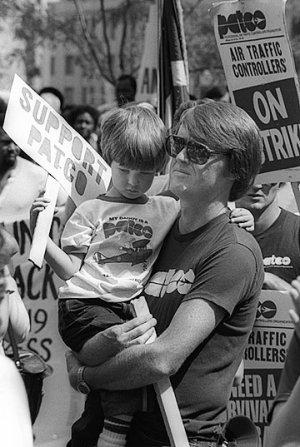
E)     Election of Ronald Reagan – two bit actor, former president of the Screen Actors Guild, became spokesman for the vehemently anti-union General Electric Company in the 1950s, and began a rapid rightward descent.


1)      Presidential policies

(a)    Cut taxes – for the rich, anyway; Reagan got Congress to cut taxes for the rich from 73% to 28%,  but taxes for the poor actually went up, because they were hit with an increase in state and local taxes to make up for the shortfall as a result from the decline in federal tax revenue

(b)   Cut social programs – Reagan cut much spending on social programs, like welfare

(c)    Increase defense spending – corporate welfare for selected industries, fed boom on the West and East coasts (see below)

(d)   Results – federal tax revenues plummeted by $750 billion, and generated staggering federal deficits of $150 billion and $200 billion, which kept the prime interest rate in double digits.

F)     Reagan boom – the Reagan years were beneficial for a small, select group of people, but the era was one of increasing disparity between the few rich, and the increasing number of poor

1)      Growing disparity – between 1977 and 1990, the income of the richest fifth of the population grew by one-third, and that of the top one percent almost doubled; but the total income of the bottom 60 percent of Americans actually fell, and the incomes of the poorest Americans fell most sharply.

II)                 Reaganomics and its Effects on Working People

A)    Undermining of Unions – perhaps the greatest effect of Reaganomics was that it undermined the financial security of working-class people, by undermining the unions that represented their unions.

1)      The Reagan Recession (1981-1983) – one of the first effects of supply-side economics, or “Reaganonimics,” as it came to be called, was one of the worst recessions of the post-war era.

(a)    Demand from corporations for give-backs – corporations in financial trouble went to unions and its workers, and demanded concessions to remain in business.  Competitors then went to their unions and workers, to demand concessions to remain competitive.  The cumulative effect of this was at best to freeze the wages of working-class, and at worst to undermine the wage structure.

B)     Toledo AP Parts Strike--fifty years after the Auto-Lite strike, a Toledo firm provoked a strike by its unionized workforce. Despite the support of a mobilized community, the union and its workers largely returned to work months later largely on the company's terms. The company, however, quickly discovered that despite this "victory," however, the company quickly discovered that they were still unable to compete in the marketplace, and with a decade were out of business.

C)  Workers in Decatur, Illinois – Decatur is a small town in central Illinois, rising out of the prairie, which had a diversified (for the Midwest) manufacturing base, but which witnessed the full aftereffects (or aftershock, to use a nuclear analogy) of Reaganomics.

1)      A.E. Staley – locally-owned agricultural goods manufacturer, manufactured corn starch, corn syrup, soy products.  This company resisted buyouts through the early 1980s, but by the end of the decade was bought out by a London-based food processor.

(a)    Demand for 12 hour, rotating shifts – in order to more “efficiently” use its workers, management wants its workers to work twelve hour shifts, and do away with shift pay differentials; it also wants workers to move from one shift to another every other month (describe havoc this plays with lives of workers with families)

2)      Firestone – the tire industry was one of the largest casualties of the merger-mania of the 1980s, and Firestone was bought by Japanese manufacturer Bridgestone.

(a)    Demand for twelve-hour, rotating shifts; do away with annual pay increases—instead, have cost of living increases and productivity incentives.

(b)   Provoked strike – this strike proved costly not only to many workers (who lost their jobs, some temporarily, to strikebreakers), but ultimately to the company, as well—the replacement workers manufactured the AT Wilderness tires that went on Ford Explorers--and proved to be inferior tires, subject to blowouts that caused numerous rollover accidents, and led to Fords abandonment of Firestone tire (after an 80-year business association, and at least one marriage between family members).

3)      Caterpillar – the industry leader in the production of heavy equipment at the time it provoked a strike by UAW members over concessions that it wanted in its contract—namely, a six-year contract, complete control over production decisions.  In the end, this company handed the UAW the worst defeat in its history.

III)            The Reagan Hangover – is suffered by working people in this country, of course.

Thursday, December 1, 2011

Weekly Assignment 14

Was the Vietnam War necessary? Was it a tragic blunder, a noble cause, or a disguised form of anti-democratic imperialism? How did it affect the American people and the American presidency?

Wednesday, November 30, 2011

Assignment 14

In very broad terms, compare the decades of the 1930s and the 1970s. How were they alike? How were they different?

America and the Global Economy


I. Rise of the New Right – built on the ashes of the Goldwater fiasco in 1964, the Republican Party targeted white suburbanites, and particularly those suburbanites living in the South and West

A)   Watergate and Its Aftermath—Although apologists for Nixon point out that—rightly—that Nixon was not the first president to abuse the power of his office to strike back at his enemies. But Nixon was the first to do this in a systematic fashion, and to use the powers of his office to attempt to subvert a criminal investigation into the attempt on the part of his campaign to fix a national election.
1)    The Watergate break-in—the so-called “third-rate burglary” was an attempt to plant illegal listening devices at the headquarters of the Democratic National Committee. This was part of a much larger operation, run by the Committee to Re-elect the President (CREEP) to manipulate the Democratic primary election.

2) Agnew resignation--Vice-President Spiro Agnew resigned as part of  the deal to  avoid  charges of bribery and extortion (settling for the charge of avoiding paying income tax on the money he accepted in bribes and extorted).
3) Nixon resignation--in August 1973 Nixon resigned, after being forced to turn over a tape revealing that he knew of the break-in and the cover-up just after they happened--and lied to his staff, his lawyers, and most importantly, to the American people on this matter.
4) Growing distrust of government--this incident, coupled with the revelations from the release of the Pentagon Papers (that the Johnson administration had lied about the basis for the war in Vietnam), fed a growing distrust of the government--so much so, that political candidates began running as "political outsiders."

B)   Tax revolts – conservatives were able to use the growing distrust against government to feed a movement to choke off funds for the government, namely taxes.

1)    California Proposition 13 – sold the idea that taxes merely funded wasteful government spending, particularly for things like education, welfare, and other social programs

2)    Rise of “code” language – while it became unacceptable to use racial slurs in the 1970s and 1980s, this did not mean that race disappeared as an issue in American politics—only that these references to race were now used in a “code” language, like “welfare queens” and “drug lords.”

C)   Christian coalitions

1)    Southern Christian academies – with the implementation of Brown v. Board of Education, white Christian academies opened as a way for parents to avoid sending their children to integrated schools.  The Carter administration tried to end the tax breaks these led to these various groups organizing to resist this

2)    Southern televangelists – preachers like Jerry Falwell and Pat Robertson used the technology of television to expand the scope (and number of contributors to) their “mission.”

3)    Reactions to gender politics

(a)   Abortion – Roe v. Wade linked control of reproductive rights to a woman’s constitutionally guaranteed rights to privacy.  To social conservatives, this upset gender roles and traditional patriarchy, and was considered an attack on “the right of a husband to protect the life of the child he fathered in his wife’s womb.”

(i)    Opposition of Catholic Church – while the Church may not speak for all of its female members on this issue, it was able to mobilize a great deal of opposition to the decision.

(b)  Opposition to the Equal Rights Ammendent – as the long sought-after ERA got closer to passage by the states, political opposition to the Amendment got more heated; this amendment would have simply recognized legally the changes that had largely already taken place in the United States.  Right-wing politicians like Phyllis Schafly, Jerry Falwell were able to distort its effects and change (by comparing it to the perceived slights whites received under Affirmative Action programs) and sway public opinion about ERA enough to prevent its passage.

(c)   Gay Pride movement – the Stonewall Riot in Greenwhich Village New York signaled that gays would no longer accept the harassment and stigmatization that they had received previously.  As gays “came out of the closet,” however, they met increasing opposition from politicians on the Right.

D)   Right turn of the Democratic Party – after the McGovern disaster of 1972 (who many party members felt was too liberal), and Carter’s victory in 1976 (who was certainly more conservative than many of the voters who voted for him), the Democratic Party became increasingly more conservative in its movement toward “the center.”

1)    Disenchantment of the poor – rather than mobilize voters who had historically made up their voter base (minorities, blue collar workers, and the poor), Democrats began to compete for the same suburban voters that Republican candidates were pursuing—white suburbanites

(a)   Decline of trade unions and urban machines – unions and machine politics had traditionally mobilized Democratic voters, and as these institutions declined, so did their effectiveness
(b) Capital flight--Although industry had been fleeing cities--and the increased power of labor unions there--since the Second World War, the economic malaise of the early 1970s, combined with the scrutiny the "urban problem" promoted, finally brought attention to the fact that the economy in the United States was undergoing a period of de-industrialization; by the  middle of the decade, many cities in the Midwest were transformed from the Manufacturing Belt to the Rust Belt.

E)    Election of Ronald Reagan – two bit actor, former president of the Screen Actors Guild, became spokesman for the vehemently anti-union General Electric Company in the 1950s, and began a rapid rightward descent.

1)    Presidential policies

(a)   Cut taxes – for the rich, anyway; Reagan got Congress to cut taxes for the rich from 73% to 28%,  but taxes for the poor actually went up, because they were hit with an increase in state and local taxes to make up for the shortfall as a result from the decline in federal tax revenue

(b)  Cut social programs – Reagan cut much spending on social programs, like welfare

(c)   Increase defense spending – corporate welfare for selected industries, fed boom on the West and East coasts (see below)

(d)  Results – federal tax revenues plummeted  by $750 billion, and generated staggering federal deficits of $150 billion and $200 billion, which kept the prime interest rate in double digits.

F)    Reagan boom – the Reagan years were beneficial for a small, select group of people, but the era was one of increasing disparity between the few rich, and the increasing number of poor

1)    Growing disparity – between 1977 and 1990, the income of the richest fifth of the population grew by one-third, and that of the top one percent almost doubled; but the total income of the bottom 60 percent of Americans actually fell, and the incomes of the poorest Americans fell most sharply.

II)   Reaganomics the War on Working People

A)   Undermining of Unions – perhaps the greatest effect of Reaganomics was that it undermined the financial security of working-class people, by undermining the unions that represented their unions.

1)    The Reagan Recession (1981-1983) – one of the first effects of supply-side economics, or “Reaganonimics,” as it came to be called, was one of the worst recessions of the post-war era.

(a)   Demand from corporations for give-backs – corporations in financial trouble went to unions and its workers, and demanded concessions to remain in business.  Competitors then went to their unions and workers, to demand concessions to remain competitive.  The cumulative effect of this was at best to freeze the wages of working-class, and at worst to undermine the wage structure.

B)   Workers in Decatur, Illinois – Decatur is a small town in central Illinois, rising out of the prairie, which had a diversified (for the Midwest) manufacturing base, but which witnessed the full aftereffects (or aftershock, to use a nuclear analogy) of Reaganomics.

1)    A.E. Staley – locally-owned agricultural goods manufacturer, manufactured corn starch, corn syrup, soy products.  This company resisted buyouts through the early 1980s, but by the end of the decade was bought out by a London-based food processor.

(a)   Demand for 12 hour, rotating shifts – in order to more “efficiently” use its workers, management wants its workers to work twelve hour shifts, and do away with shift pay differentials; it also wants workers to move from one shift to another every other month (describe havoc this plays with lives of workers with families)

2)    Firestone – the tire industry was one of the largest casualties of the merger-mania of the 1980s, and Firestone was bought by Japanese manufacturer Bridgestone.

(a)   Demand for twelve-hour, rotating shifts; do away with annual pay increases—instead, have cost of living increases and productivity incentives.

(b)  Provoked strike – this strike proved costly not only to many workers (who lost their jobs, some temporarily, to strikebreakers), but ultimately to the company, as well—the replacement workers manufactured the AT Wilderness tires that went on Ford Explorers.

3)    Caterpillar – the industry leader in the production of heavy equipment at the time it provoked a strike by UAW members over concessions that it wanted in its contract—namely, a six-year contract, complete control over production decisions.  In the end, this company handed the UAW the worst defeat in its history.

III) The Reagan Hangover – is suffered by working people in this country, of course.